Choosing the right Uhmw Plastic Sheet can affect wear life, noise control, maintenance costs, and production reliability. Global buyers often compare sheets for mining chutes, conveyor guides, food-processing equipment, and heavy-duty liners. The best option depends on more than price.
This guide examines seven leading sheet choices through practical buying criteria. These include molecular weight, thickness tolerance, impact resistance, abrasion performance, operating temperature, and machining behavior. Supplier documentation also matters. Technical data sheets, inspection records, and consistent batch quality provide stronger evidence than attractive marketing claims.
In real sourcing projects, a sheet that performs well in a dry warehouse may behave differently outdoors. Moisture, ultraviolet exposure, sharp gravel, and repeated sliding can change the result. A 10 mm sheet may suit a guide rail, while a 30 mm liner may be necessary for impact zones. Small details matter.
Some suppliers list impressive wear figures without explaining test methods. That deserves caution. ASTM or ISO-based testing can improve comparison, but test results still require context. No material is ideal for every application. Even this selection has limits, and buyer requirements may expose gaps in the available data.
The following review compares seven UHMW plastic sheets for international purchasers. It focuses on verifiable specifications, application fit, customization, packaging, and supplier reliability. The goal is practical guidance, not a universal ranking. Measure twice. Specify clearly.
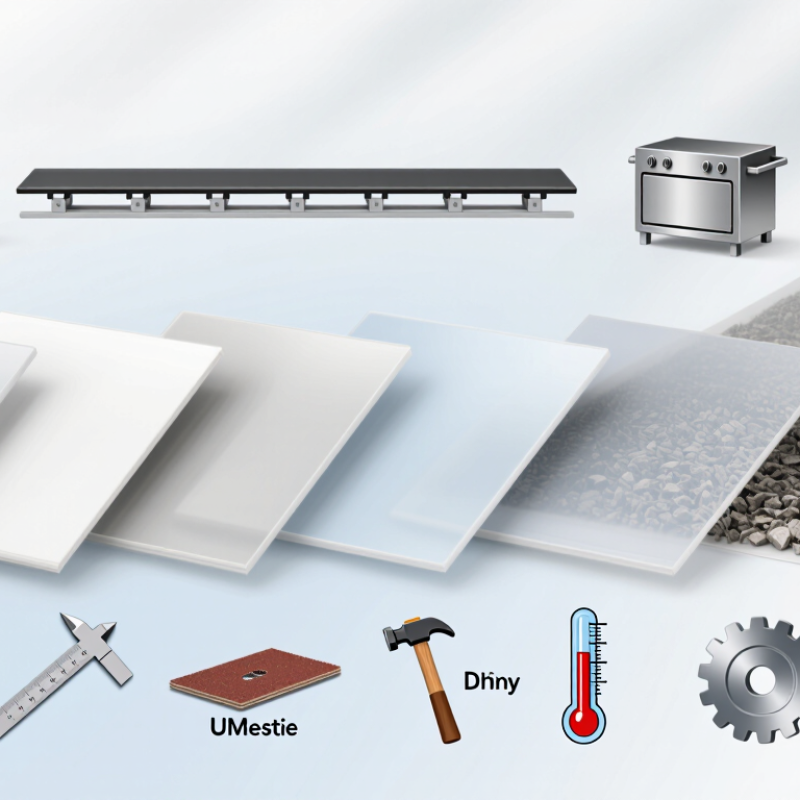
UHMW plastic sheets are ultra-high-molecular-weight polyethylene panels designed for demanding wear conditions. Their long molecular chains create strong resistance to abrasion, impact, and sliding friction. In practical fabrication, the surface feels smooth and slightly waxy. That matters. It helps reduce material buildup on chutes, liners, guides, and wear strips. UHMW also resists moisture and many acids, alkalis, and solvents. However, it has limits. Continuous heat can cause softening, distortion, or dimensional change. It is not always the right choice for high-temperature service.
For global buyers, “best” depends on the working environment, not only the price. Seven useful sheet categories include virgin, reprocessed, UV-stabilized, anti-static, filled, food-contact, and custom-colored grades. Virgin material usually offers more consistent performance, while reprocessed sheets may suit less critical applications. UV-stabilized grades are more suitable for outdoor exposure.
Ask for molecular-weight data, thickness tolerance, temperature guidance, and test reports. Confirm whether the sheet is easy to machine with standard cutting tools. A supplier’s traceability records also reveal production discipline. My earlier assumption was that thicker sheets always last longer. Field conditions proved otherwise. Poor support, sharp loading points, and incorrect fastening can shorten service life quickly. Selection should consider load, speed, temperature, chemicals, sunlight, and maintenance access together.
Choosing the right UHMW plastic sheet requires more than comparing thickness and price. Industrial buyers should evaluate load, friction, impact, temperature, and chemical exposure together. A sheet used for conveyor guides may need excellent wear resistance and low friction. A mining liner may require stronger impact performance and greater thickness.
Start with the working conditions. Record contact pressure, sliding speed, operating temperature, and cleaning chemicals. UHMW sheets perform well in many demanding environments, but extreme heat can reduce stiffness. Moisture resistance is useful, yet it does not solve every sealing or contamination problem. Check technical data, test methods, and actual application history before approving a material. Small differences in formulation can affect service life.
Tips: Ask for batch traceability, dimensional tolerances, and independent test results. Inspect a sample after machining, not only before installation. Confirm food-contact or other regulatory suitability for your destination market. Never assume a general-purpose grade fits every application. A short field trial often reveals problems that catalog data misses. We have seen smooth sheets wear unevenly when alignment was poor. That failure was not the material alone.
Global buyers should also examine cutting quality, flatness, packaging, and delivery protection. Warped sheets can create installation delays and uneven pressure. Compare suppliers using the same specifications, not vague terms such as “premium” or “heavy duty.” Cost matters, but replacement labor and downtime may matter more. The best choice balances verified performance, practical processing, and dependable documentation.
UHMW sheets vary by load, temperature, moisture, and sliding speed. In field use, standard virgin UHMW-PE works well for chute liners, wear strips, and conveyor guides. It offers low friction and reliable impact resistance. Reprocessed UHMW sheets cost less, but their color and performance may vary. Use them for non-critical bins, guards, or temporary liners. Check the batch carefully.
Oil-filled UHMW can reduce friction in dry-running parts. Glass-filled grades improve stiffness, although they may wear mating surfaces faster. Conductive or antistatic sheets help control static buildup around sensitive equipment. They still require proper grounding. UV-stabilized UHMW suits outdoor covers, dock guides, and exposed handling systems. Its service life depends heavily on sunlight and temperature. Food-contact-oriented grades are available for processing areas, but buyers must verify current regional requirements and supplier documentation.
A practical selection also considers thickness tolerance, flatness, machining quality, and packaging. Ask for a technical data sheet, test certificate, and sample before ordering large quantities. Measure the sheet after delivery, especially following long-distance transport. I have seen a strong grade fail because the support spacing was too wide. Material choice is only part of the result.
One detail is often missed: UHMW expands noticeably with heat. Leave movement gaps during installation.
Choosing the seven best UHMW plastic sheets depends on the working environment, not popularity. Virgin UHMWPE offers balanced wear resistance and low friction for general machinery. Food-contact grades suit conveyors and cutting surfaces when documentation supports the claim. Reprocessed sheets can reduce cost, but their consistency may vary between batches. Anti-static grades help manage electrical charge in dusty production areas. UV-stabilized sheets perform better outdoors. Oil-filled grades can reduce friction in demanding sliding applications. Ceramic-filled options improve abrasion resistance, although they may be harder to machine.
Size and thickness affect both performance and waste. Standard sheets may range from thin liners to heavy-duty plates above 100 millimeters. Confirm flatness, tolerance, and cut dimensions before ordering. Colors are not merely cosmetic. Black often supports outdoor use, while white can improve visual inspection. Blue, green, and other colors may assist production zoning, but color alone does not prove grade or compliance. No sheet wins every test.
Tips: Request a technical data sheet, batch certificate, and sample piece. Compare impact strength, tensile properties, wear rate, friction, and operating temperature. ASTM D4020 or ISO-based test data can improve comparison, but test methods must match your application. For food contact, verify applicable regional requirements, such as FDA or EU documentation. A practical review should admit one weakness: supplier data may not reflect your actual load, speed, moisture, or cleaning process. Trial cutting and field testing remain wise.
Global buyers should judge UHMW plastic sheets beyond price and surface appearance. The right grade depends on wear, impact, temperature, and contact requirements. Request a technical data sheet, certificate of analysis, and batch traceability records. Certifications should match the application, not simply decorate a sales file. Quality systems such as ISO 9001 can support consistency, but they do not guarantee every sheet meets your tolerance. Ask for recent test results and verify the testing method.
Tips: Order a small sample before approving bulk production. Measure thickness, flatness, color, and edge quality. Confirm whether food-contact, chemical, or environmental documentation applies to your market. Check the certificate issuer and document dates carefully. A clear paper trail saves time when customs or quality teams ask questions.
Shipping can quietly damage a good purchase. Sheets need edge protection, stable stacking, and weather-resistant packaging. Confirm dimensions, gross weight, pallet limits, and customs documents before dispatch. Agree on Incoterms and insurance responsibilities in writing. Supplier quality also requires practical evidence. Review inspection photos, production capacity, tolerance control, and complaint procedures. I have learned that attractive samples can hide batch variation. For this reason, I prefer pre-shipment inspection and retained samples. Still, inspection is not perfect, and buyers should review their own receiving process. A reliable supplier answers technical questions directly and reports limitations without exaggeration.
They suit demanding wear conditions. Their smooth, slightly waxy surface reduces buildup on chutes, liners, guides, and wear strips. They resist abrasion, impact, sliding friction, moisture, and many common chemicals.
Not reliably. Continuous heat may soften the sheet or change its dimensions. Review the actual operating temperature, not only the supplier’s general range.
UV-stabilized grades are generally better for sunlight exposure. Black sheets may support outdoor use, but color alone proves nothing. Confirm the grade through technical documents.
They can reduce cost in less critical applications. However, batch consistency may vary. Request samples, recent test data, and batch traceability records before ordering large quantities.
Consider load, support spacing, impact points, speed, and fastening. A thicker sheet is not always longer-lasting. Poor support can damage even a heavy plate quickly.
Request thickness tolerance, flatness data, molecular-weight information, operating guidance, and test reports. Ask for a certificate, batch records, and a sample piece. Keep the paperwork clear.
No. White may improve visual inspection, while different colors can support production zoning. Color does not confirm wear resistance, outdoor suitability, or contact compliance.
Confirm dimensions, gross weight, pallet limits, packaging, and customs documents before dispatch. Sheets need edge protection and stable stacking. A small trial order is wiser than guessing.
This guide explains how to choose the right Uhmw Plastic Sheet for demanding industrial environments. It introduces UHMW plastic’s key properties, including outstanding wear resistance, low friction, impact strength, moisture resistance, and reliable performance in applications involving sliding, abrasion, or material handling. It also outlines how buyers can assess sheet thickness, density, temperature limits, surface performance, machining needs, and compatibility with specific operating conditions.
The article presents seven practical UHMW sheet options for global buyers, comparing grades, dimensions, colors, and performance standards without focusing on any particular brand. It also highlights important purchasing factors, such as material certification, quality documentation, packaging, shipping arrangements, production consistency, and supplier communication. By considering both technical requirements and international sourcing conditions, buyers can select a suitable sheet that offers dependable service life, efficient installation, and better long-term value for industrial use.

Beyond