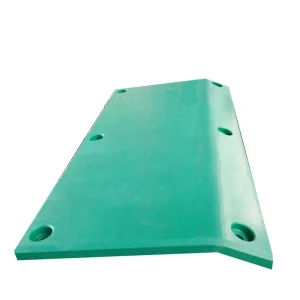
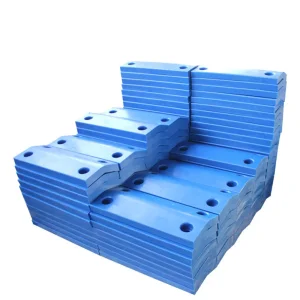
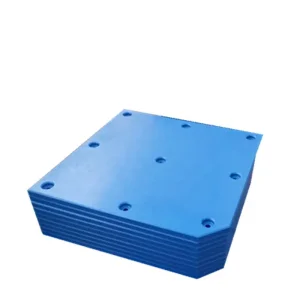
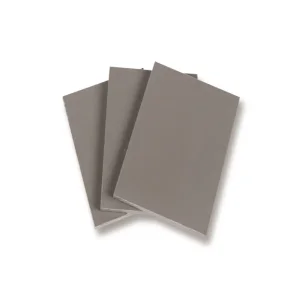
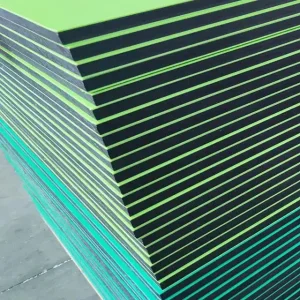
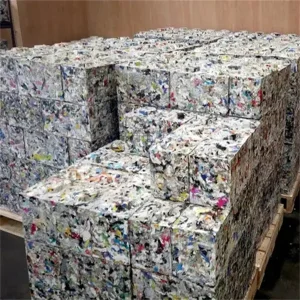
Engineered engineering plastic sheets and custom profiles designed to endure extreme weathering and high impact loads.
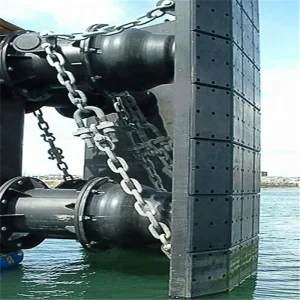
In modern marine engineering, the integrity of ports, harbors, and vessels relies on advanced impact-absorption technologies. Marine fender panels serve as the critical interface between vessels and berthing structures. As ships grow in size and cargo capacities expand, the force exerted during docking increases exponentially. A well-designed fender panel system minimizes stress on both the ship’s hull and the concrete pier, ensuring operational safety and longevity.
Most modern fender systems utilize high-performance polymers, primarily Ultra-High Molecular Weight Polyethylene (UHMWPE) and High-Density Polyethylene (HDPE), to face the steel frontal frames of rubber fender units. These materials are chosen for their exceptionally low coefficient of dynamic friction, superior wear resistance, and high impact tolerance under extreme loads.
The performance of marine fender pads is directly linked to the molecular weight of the polymer. Standard PE1000 grade UHMWPE possesses a molecular chain weight ranging from 4.5 million to over 9 million g/mol. This ultra-high molecular weight provides a dense, tangled polymer network that excels at energy distribution.
In contrast, conventional High-Density Polyethylene (HDPE) has a lower molecular weight, which makes it less wear-resistant but highly rigid and cost-effective. Depending on the docking frequency, tidal movement, and vessel types, engineers must balance these properties to select the optimal material.
| Property | UHMWPE (PE1000) | HDPE (PE300/PE500) | Nylon PA6 | Polyurethane (PU) |
|---|---|---|---|---|
| Molecular Weight (g/mol) | 4.5M – 9.2M | 300k – 500k | N/A | N/A |
| Dynamic Friction Coeff. | 0.10 – 0.15 | 0.20 – 0.25 | 0.30 – 0.40 | 0.45 – 0.60 |
| Wear Resistance (Sand-Slurry Test) | 100 (Baseline) | 350 (Lower) | 120 (Good) | 80 (Excellent) |
| Water Absorption (%) | < 0.01% | < 0.01% | 1.5% – 3.0% | 0.5% – 1.0% |
| Operating Temp Range | -150°C to +80°C | -50°C to +80°C | -30°C to +100°C | -20°C to +80°C |
Tropical port structures face intense ultraviolet (UV) radiation and elevated ocean temperatures, accelerating polymer chain degradation. BEYOND incorporates tailored carbon black and Hindered Amine Light Stabilizers (HALS) into our UHMWPE marine facing pads, ensuring a maintenance-free lifetime of over 15 years in environments like Southeast Asia and the Middle East.
Standard industrial plastics become brittle and crack under sub-zero temperatures. Because UHMWPE maintains high impact strength and ductile properties even at extreme cold temperatures down to -150°C, it remains the standard choice for LNG terminals in Northern Europe, Alaska, and Russia.
Dry bulk terminals handling coal, iron ore, and minerals encounter high concentrations of abrasive particulates. The constant friction of vessel hulls covered in abrasive dust requires fender panels with low wear rates. PE1000's self-lubricating properties reduce material loss under continuous loading.
The marine infrastructure sector is shifting toward sustainable, high-durability polymer technologies. At BEYOND, our R&D roadmap focuses on:
Operating out of Tianjin, China’s industrial hub, Tianjin Beyond Technology Development Co., Ltd. has established a highly reliable supply chain for engineering plastics. With over 10 years of experience, our 50,000-square-meter facility houses advanced compression molding presses and CNC machining centers.
Our manufacturing capability allows us to process high-volume orders of thick UHMWPE and HDPE sheets with dimensional accuracy. Partnering with top-tier raw material providers like TICONA, LG, and Sinopec ensures that we maintain the consistent physical and chemical properties required for safety-critical marine applications.
BEYOND maintains a rigorous quality management system certified to ISO9001, SGS, and BV standards. Every step, from raw material inspection to finished CNC machining, is documented. In addition to our engineering plastics, our group coordinates raw material sourcing with botanical and high-purity oil divisions, such as Ya'an Times Biotech Co., Ltd. (located in Sichuan, utilizing resources from varied altitudes of 525m to 7555m to source pure, natural camellia, eucalyptus, and turmeric oils). This operational breadth demonstrates our group's commitment to high standards, raw material purity, and chemical compliance.
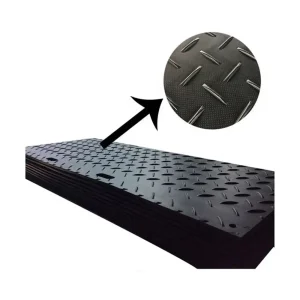
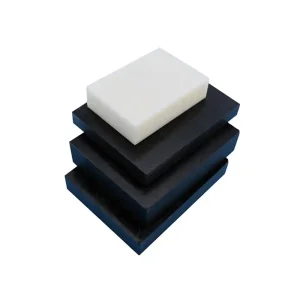
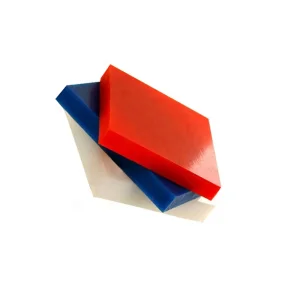
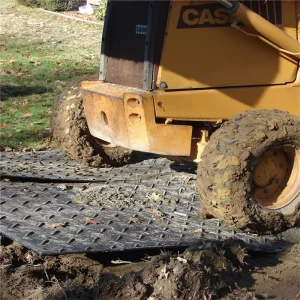
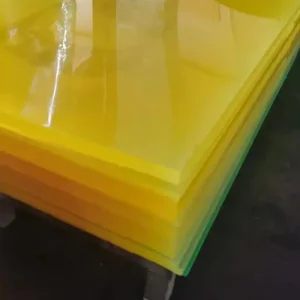
Explore our expanded catalog of high-density ground mats, customized profiles, and industrial plastic liners.
Technical answers to key engineering queries regarding UHMWPE and HDPE marine dock bumper plates.
 Beyond