China has become a major sourcing hub for Heavy Duty Plastic products, serving construction, logistics, agriculture, manufacturing, and infrastructure projects. Its manufacturers produce pallets, storage bins, crates, containers, protective barriers, and custom industrial parts. However, “top” should not mean the largest factory or the lowest quotation. It should reflect proven performance, production consistency, material expertise, and dependable communication.
A reliable supplier usually combines modern injection molding equipment with experienced engineering teams. Look for clear details about resin grades, load capacity, impact resistance, temperature tolerance, and expected service life. Factory photographs can help, but verified samples reveal more. A pallet may look strong until repeated forklift use exposes weak corners. Product testing, dimensional inspection, and batch records are important evidence. Certifications may support credibility, but they should match the product and market requirements.
This guide examines leading Chinese manufacturers through practical purchasing criteria. It considers manufacturing experience, customization ability, quality control, export support, and after-sales responsiveness. It also highlights questions buyers often overlook, including mold ownership, replacement-part availability, packaging methods, and shipping protection. A shortlist is never perfect. Supplier capabilities change, and attractive websites can hide limited production experience. Careful buyers should request recent samples, factory documentation, and transparent quotations before making a decision. The strongest partnership is not always the cheapest option. It is the one that performs reliably after delivery, during daily use, and under pressure.
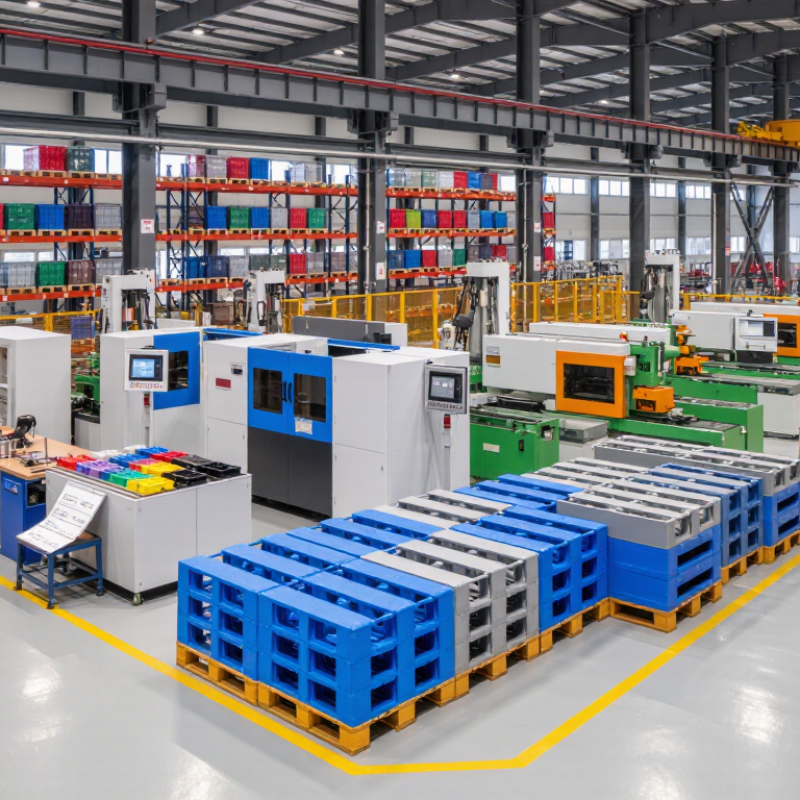
Definition and Scope of Heavy-Duty Plastic Manufacturing in China
Heavy-duty plastic manufacturing in China covers products built for repeated loads, impact, chemicals, weather, or long service periods. It is not limited to thick packaging. The scope includes industrial containers, pallets, pipe systems, agricultural components, protective housings, and construction products. Common materials include HDPE, polypropylene, PVC, and reinforced engineering plastics. Production methods include injection molding, extrusion, rotational molding, blow molding, and thermoforming.
The scale is substantial. China’s National Bureau of Statistics reported 74.885 million tonnes of plastic products output in 2023. However, this figure combines household, packaging, and industrial products. It cannot identify heavy-duty production alone. That distinction matters. Industry market reports often use different definitions, making direct comparisons imperfect.
A serious manufacturer must control more than appearance. Engineers examine wall thickness, impact resistance, load cycles, UV exposure, temperature changes, and chemical contact. Batch records and test results support reliability. For example, a warehouse pallet may face repeated forklift impacts, while an outdoor pipe must resist sunlight and soil pressure. Standards from ISO, ASTM, and Chinese industrial authorities can guide testing, but compliance depends on the product and application. The boundary remains flexible, and some products need more transparent classification.
Heavy-duty plastic products depend on material selection, not thickness alone. Manufacturers commonly use HDPE, polypropylene, ABS, nylon, and PVC. Each polymer answers a different industrial problem. HDPE resists moisture and many chemicals. It suits bins, pallets, tanks, and outdoor housings. Polypropylene is lighter and handles repeated flexing well. However, cold temperatures can make it less forgiving. That detail matters.
ABS provides impact strength and a clean surface for equipment covers. Nylon performs well near moving parts, especially when wear and friction matter. Glass fibers improve stiffness, but they may reduce impact resistance. Mineral fillers lower cost and limit shrinkage. They can also make parts more brittle. Additives deserve attention. UV stabilizers protect outdoor components, while flame-retardant packages require careful compliance testing. Recycled content can improve resource efficiency, but its moisture, color, and strength must be controlled.
Reliable production begins with a documented material specification. It should identify grade, additives, recycled percentage, and testing conditions. Factory teams should check melt flow, density, impact strength, and dimensional stability. Samples can pass visual inspection and still fail after heat cycles. This weakness is often overlooked. A practical review should include load testing, drop testing, and exposure to actual working conditions. No polymer is perfect. Design, mold temperature, cooling, and storage can change final performance. Good manufacturers explain these trade-offs instead of promising universal durability.
Evaluating China’s leading heavy-duty plastic manufacturers requires more than comparing prices or factory photos. Start with the product’s working conditions: load weight, impact exposure, temperature changes, chemicals, and outdoor use. A capable manufacturer should explain resin selection, wall thickness, reinforcement design, and expected service life. Ask for production samples, dimensional records, and test results from identifiable laboratories. Vague claims are warning signs.
Visit the facility when possible. Observe material storage, drying equipment, molding machines, trimming stations, and final inspection. Check whether recycled content is controlled and documented. Traceable batch records matter when a shipment includes thousands of crates, pallets, bins, or protective parts. Quality systems should cover incoming materials, mold maintenance, process settings, and packaging. Certificates help, but they cannot replace physical testing.
Communication also reveals manufacturing maturity. Request a written specification with tolerances, inspection methods, sampling levels, and corrective-action procedures. A reliable supplier will discuss tooling ownership, replacement parts, lead times, and capacity during peak seasons. Do not trust the largest facility automatically. I once overvalued impressive equipment and underestimated weak follow-up after delivery. That mistake was expensive. Smaller factories may perform well, but their records need closer review. Ask difficult questions early, compare answers with samples, and keep an independent inspection plan for the first production batches. No evaluation is perfect. Conditions change. Recheck critical assumptions before committing.
A practical procurement framework for comparing manufacturers without relying on company or brand data. The weighting reflects the factors most relevant to industrial plastic parts, pallets, containers, bins, and custom molded products.
Evaluation weighting: quality management and testing should receive the greatest emphasis, followed by material traceability, production capability, delivery performance, sustainability, and export support. Buyers can assign supplier-specific scores to each category during audits and quotation reviews.
China’s top heavy-duty plastic manufacturers usually serve logistics, construction, agriculture, and industrial storage. Their major product categories include pallets, stackable crates, waste containers, material-handling bins, protective barriers, and water tanks. Some also produce HDPE sheets, drainage components, pipe fittings, and custom molded housings. The right supplier depends on load rating, temperature exposure, chemical contact, and expected service life.
Manufacturing capability is often the real differentiator. Large facilities may combine injection molding, blow molding, rotational molding, and extrusion. Injection molding suits repeatable pallets and bins with reinforced ribs. Rotational molding supports large tanks with even wall thickness. Extrusion creates continuous sheets and profiles. Reliable producers use steel tooling, controlled cooling, and dimensional inspection. They should also provide resin specifications, impact data, load-test records, and batch traceability.
Details matter.
A serious factory can discuss mold steel, cycle time, warpage control, and recycled-content limits without vague promises. Color matching, logo placement, drainage holes, nesting design, and forklift entry should be reviewed before production. Sample testing is essential, especially for containers exposed to sunlight or freezing temperatures. Not every factory with a broad catalog has equal engineering depth. Some impressive samples hide inconsistent wall thickness or weak weld lines. Buyers should compare drawings, test methods, production photos, and inspection records. Even experienced teams can overlook stacking behavior after repeated use. That gap deserves practical testing.
| Major Product Category | Typical Heavy-Duty Materials | Primary Manufacturing Processes | Typical Product Characteristics | Common Manufacturing Capabilities | Relevant Standards and Tests | Typical Industrial Applications |
|---|---|---|---|---|---|---|
| Reusable Plastic Pallets | HDPE PP Recycled or virgin resin options | Injection molding, structural-foam molding, and high-pressure compression molding | Load-bearing platforms with reinforced ribs, optional steel reinforcement, two-way or four-way forklift entry, and nestable or stackable designs | Large-part molding; multi-cavity tooling; automated demolding; dimensional inspection; custom deck, runner, and base configurations | Static, dynamic, and racking-load tests; impact testing; dimensional checks; ISO 8611 pallet performance methods are commonly referenced | Warehousing, export packaging, food logistics, chemical distribution, and manufacturing plants |
| Heavy-Duty Storage Bins and Crates | HDPE PP Impact-modified copolymers | Injection molding, blow molding for hollow containers, and thermoforming for selected formats | Reinforced walls, stackable geometry, interlocking features, smooth or ventilated sides, and reusable construction | Large injection presses; hot-runner tooling; color masterbatch control; custom lids, labels, dividers, and RFID-ready surfaces | Compression and stacking tests; drop and impact tests; material verification; food-contact compliance where specified by the buyer | Automotive parts, agricultural produce, factory material handling, retail distribution, and cold-chain logistics |
| Industrial Drums and Open-Head Containers | HDPE UV-stabilized polyethylene; chemical-resistant grades | Extrusion blow molding, injection blow molding for smaller formats, and injection molding for closures | One-piece hollow bodies, tamper-evident closures, UN-rated configurations when certified, and resistance to moisture and many chemicals | Multi-layer blow molding; handle and closure integration; leak-proofness testing; custom neck finishes and color identification | UN packaging performance testing where applicable; leak, drop, stack, and hydrostatic-pressure tests; wall-thickness inspection | Lubricants, chemical products, water-treatment materials, food ingredients, and industrial liquids |
| Intermediate Bulk Containers and Large Liquid Tanks | HDPE UV-stabilized HDPE with galvanized or coated steel cage systems | Extrusion blow molding for the inner bottle; injection molding for caps, valves, and fittings | Common nominal capacities include 600 L and 1,000 L; pallet bases, protective cages, top-fill openings, and bottom discharge valves | Large-volume blow molding; cage assembly; valve installation; batch traceability; washing and reconditioning for approved reuse programs | UN certification for regulated dangerous goods; leak, drop, stack, and vibration tests; valve and closure integrity checks | Bulk chemicals, liquid food ingredients, pharmaceuticals, agricultural products, and industrial fluids |
| Rotomolded Tanks and Industrial Containers | LLDPE HDPE UV-stabilized polyethylene; reinforced grades | Rotational molding using powdered polymer resin | Seamless hollow construction, corrosion resistance, complex shapes, molded-in inserts, and optional internal baffles | Large molds; multi-arm rotational molding; wall-thickness control; threaded fittings, flanges, lids, stands, and custom accessories | Hydrostatic leak testing; wall-thickness measurement; UV-weathering evaluation; dimensional and fitting-integrity inspection | Water storage, wastewater treatment, aquaculture, agriculture, chemical handling, and industrial processing |
| Heavy-Duty Waste and Recycling Containers | HDPE PP Recycled-content options subject to application requirements | Injection molding, blow molding, and rotational molding for larger container formats | Reinforced lifting edges, compatible wheel systems, hinged lids, drainage features, and weather-resistant surfaces | Automated assembly; wheel and axle installation; lid fitting; custom colors and hot-stamping or in-mold labeling | Load, impact, tipping, lid, wheel, and handle tests; EN 840 is commonly referenced for compatible mobile waste containers | Municipal collection, factories, hospitals, construction sites, recycling centers, and commercial facilities |
| Construction and Infrastructure Products | HDPE PP PVC Material selection depends on exposure and structural requirements | Extrusion, injection molding, profile extrusion, rotational molding, and thermoforming | High impact resistance, low moisture absorption, corrosion resistance, UV-stabilized options, and modular connection systems | Profile and pipe extrusion; co-extrusion; custom dies; ultrasonic or thermal welding; CNC trimming and drilling | Product-specific dimensional, pressure, impact, fire, and weathering tests; applicable ASTM, EN, ISO, or local construction standards | Drainage, cable protection, road construction, temporary barriers, utility infrastructure, and site safety |
| Protective Guards and Material-Handling Components | HDPE PP ABS Elastomer inserts for selected impact zones | Injection molding, thermoforming, extrusion, CNC machining, and plastic welding | Impact-absorbing profiles, replaceable wear strips, protective corners, machine guards, and custom mounting points | Custom CAD and mold design; low- to high-volume production; insert molding; drilling, routing, welding, and assembly | Impact and abrasion testing; dimensional inspection; fastening-strength tests; application-specific safety and machine-guarding requirements | Factories, warehouses, ports, mining operations, food-processing facilities, and logistics centers |
| Custom Large Plastic Components | HDPE PP PA PC Polymer selection based on temperature, impact, chemical, and load requirements | Injection molding, blow molding, rotational molding, extrusion, compression molding, and CNC fabrication | Made-to-order geometry, reinforced sections, threaded fittings, inserts, gaskets, multi-material assemblies, and surface-texture options | 3D product development; mold-flow analysis; prototype tooling; automated production; assembly; packaging; export documentation | Dimensional reports; first-article inspection; material certificates; batch traceability; functional, leak, load, and environmental testing | OEM equipment, industrial automation, energy projects, agricultural machinery, transportation, and engineered systems |
China’s leading heavy-duty plastic manufacturers compete through measurable quality, not attractive catalogs alone. Buyers should request material specifications, batch records, and recent test reports. Reputable factories explain whether products use virgin resin, recycled content, or a controlled blend. This choice affects impact strength, odor, color stability, and service life. During a factory visit, inspect injection machines, mold storage, and finished-goods pallets. Small details often reveal production discipline.
Customization usually begins with the working environment. A warehouse tote may need reinforced corners, drainage holes, stackable ribs, or forklift access. Manufacturers can adjust dimensions, wall thickness, color, texture, and labeling. However, every change can affect mold cost and lead time. Ask for a production sample before approving mass production. It is cheaper than discovering warped lids in a full container. Some suppliers promise unlimited flexibility. That claim deserves careful questioning.
Export planning requires more than choosing a port. Confirm packaging strength, carton markings, loading methods, and container utilization. Request product dimensions and gross weights for freight calculations. Verify applicable destination standards, customs documents, and material declarations with qualified professionals. A supplier should provide consistent invoices, packing lists, and inspection records. Independent pre-shipment inspection adds useful evidence, especially for new partnerships. Mistakes still happen, even with experienced teams. Clear acceptance criteria, photographs, and written change approvals reduce costly arguments.
Common choices include HDPE, polypropylene, ABS, nylon, and PVC. Each material solves different performance needs.
A thick part can still fail in cold temperatures or after repeated heat cycles. Design matters too.
HDPE resists moisture and many chemicals. It works well for bins, pallets, tanks, and outdoor housings.
Polypropylene is lightweight and handles repeated flexing. Cold conditions can make it less forgiving.
Glass fibers increase stiffness but may reduce impact resistance. Mineral fillers lower cost, yet can increase brittleness.
Teams should check melt flow, density, impact strength, and dimensional stability. Drop tests and load tests reveal hidden weaknesses.
Define the working environment first. Request reinforced corners, drainage holes, stackable ribs, or access openings when needed.
A sample can reveal warped lids, poor fit, or weak corners. It costs less than correcting a full shipment.
Confirm packaging strength, carton markings, loading methods, product weights, and destination requirements. Clear documents prevent avoidable delays.
Use written acceptance criteria, photographs, and approved change records. Independent inspection adds useful evidence. Mistakes still happen.
China’s Heavy Duty Plastic manufacturing industry covers the design, production, and processing of durable plastic products for construction, logistics, agriculture, industrial equipment, packaging, and infrastructure applications. Common materials include HDPE, PP, PVC, ABS, nylon, and reinforced engineering plastics, selected according to strength, impact resistance, chemical stability, temperature tolerance, and service life. Leading manufacturers are evaluated by production capacity, material expertise, mold development, quality control systems, testing procedures, and experience with customized orders.
Major product categories may include industrial containers, pallets, pipes, protective components, storage systems, machinery parts, and large molded structures. Buyers should also review a manufacturer’s ability to support injection molding, blow molding, extrusion, rotational molding, and other suitable processes. Reliable suppliers should provide consistent quality, accurate specifications, traceable materials, and practical customization services. For export projects, attention should be given to packaging, documentation, inspection, delivery coordination, and compliance with the destination market’s applicable standards.

Beyond