Choosing reliable suppliers matters when a small tooth error can create noise, vibration, and premature wear. Gear And Gear Rack systems support machine tools, robotics, elevators, conveyors, automotive equipment, and automated warehouses. Their performance depends on more than material strength. Tooth geometry, heat treatment, machining accuracy, lubrication, and inspection records all matter.
Industry forecasts show sustained demand. MarketsandMarkets estimates that the industrial gears market will grow from about USD 28 billion in 2024 to more than USD 39 billion by 2029. Grand View Research also reports continued expansion in the broader gears market, driven by factory automation, renewable-energy equipment, and transportation systems. These reports use different definitions and methods. That difference deserves attention.
Quality is not a slogan.
Dr. Hermann J. Stadtfeld, a widely recognized gear-technology specialist, has emphasized, “Gear design must serve the complete system, not one component.” That principle shapes this supplier review. The strongest manufacturers usually provide engineering support, documented tolerances, traceable materials, and practical customization. They also explain limitations clearly. That is important.
No supplier is perfect. A global brand may offer excellent precision but longer delivery times. A regional manufacturer may respond faster but provide fewer testing facilities. Pricing can mislead buyers when heat treatment, inspection, tooling, and packaging are excluded. This guide compares seven leading Gear And Gear Rack suppliers worldwide through product range, manufacturing capability, quality systems, application experience, delivery coverage, and customer support. Readers should still verify current certifications, technical drawings, and sample performance before purchasing.
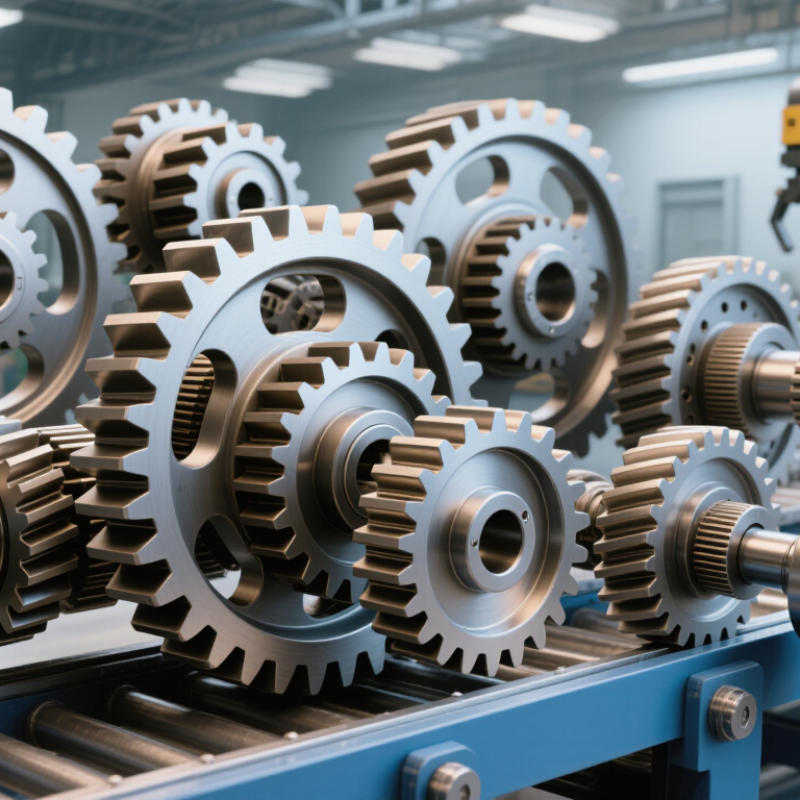
A gear transfers motion and torque between rotating shafts, while a gear rack is a straight bar with evenly spaced teeth. When a round pinion engages the rack, rotation becomes precise linear movement. This mechanism appears in CNC machines, robotic axes, automated doors, steering systems, lifting equipment, and packaging lines. It is simple in principle. Alignment is not.
Grand View Research estimated the global gears market at more than US$80 billion in 2023, with continued growth driven by automation, vehicles, and industrial machinery. The International Federation of Robotics also reported over 500,000 industrial robots installed worldwide in 2023. Many of these systems depend on rack-and-pinion drives for fast, repeatable positioning. In practice, tooth accuracy, surface hardness, lubrication, and mounting rigidity determine service life more than appearance.
Professional buyers should compare suppliers using measurable evidence. ISO 9001 quality systems, ISO 6336 calculation methods, material certificates, tooth-profile inspection, and documented load ratings provide useful safeguards. A supplier should also explain backlash, module, pressure angle, heat treatment, and allowable speed. That detail matters. A rack can look flawless yet produce vibration after installation. I have found that installation errors are often underestimated, especially when long racks are joined across several machine sections. Supplier selection therefore requires both laboratory data and practical testing under the intended load.
The table below compares seven representative supplier profiles by region, product capability, materials, standards, and typical applications. Gear racks convert rotary motion into linear motion, while gears transmit torque and speed between rotating shafts.
| Supplier Profile | Primary Market | Main Product Range | Common Gear Types | Gear Rack Options | Typical Materials | Typical Applications | Relevant Standards or Controls |
|---|---|---|---|---|---|---|---|
| Profile 1: European precision manufacturer | Western and Central Europe | Precision spur, helical, bevel, and planetary gears | Spur gears, helical gears, pinions, bevel gears | Straight-tooth and helical racks; ground or milled profiles; sectional lengths for long travel | Case-hardened steel, through-hardened steel, stainless steel | Robotics, machine tools, packaging equipment, automation axes | ISO 6336 calculations, ISO 1328 gear accuracy, documented inspection reports |
| Profile 2: North American industrial supplier | United States and Canada | Standard and custom power-transmission gears and rack systems | Spur, helical, worm-compatible gearing, timing components | Commercial-grade straight racks, precision racks, mounting-hole and cut-to-length options | Alloy steel, carbon steel, ductile iron, engineering plastics | Conveyors, material handling, lifting equipment, industrial machinery | AGMA design practices, ANSI inch pitches, metric module compatibility, traceability controls |
| Profile 3: East Asian automation specialist | Japan, South Korea, and neighboring export markets | Low-backlash gears, servo pinions, precision rack-and-pinion assemblies | Helical pinions, precision spur gears, planetary gear components | Ground racks with controlled tooth accuracy; matched rack-and-pinion sets | Hardened alloy steel, stainless steel, nitrided steel | CNC machines, semiconductor equipment, Cartesian robots, electronic assembly lines | Low-backlash measurement, runout inspection, ISO gear accuracy grades |
| Profile 4: South Asian custom-machining supplier | India and South Asian export markets | Made-to-order gears, large-diameter gears, industrial rack sections | Spur, helical, bevel, internal, and large reduction gears | Milled racks, heavy-duty racks, custom lengths, drilled or tapped mounting patterns | Carbon steel, alloy steel, cast iron, bronze for selected gear applications | Steel mills, cranes, agricultural machinery, process plants, elevators | Material certificates, heat-treatment records, dimensional inspection, customer drawings |
| Profile 5: Southeast Asian volume supplier | China, Taiwan, and Southeast Asian manufacturing hubs | Standard catalog gears, racks, pinions, and cost-focused custom parts | Spur gears, helical gears, timing pulleys, rack pinions | Module-based racks, standard lengths, surface-treated and black-oxide options | Medium-carbon steel, alloy steel, stainless steel, nylon and acetal | 3D printers, small automation systems, access mechanisms, general machinery | Metric modules, sample approval, batch inspection, coating and hardness verification |
| Profile 6: Middle Eastern and African heavy-duty supplier | Middle East, Africa, and regional infrastructure markets | Replacement gears, open gearing, crane and industrial transmission components | Large spur gears, helical gears, pinions, open-drive gear sets | Heavy-section racks and custom-machined linear drive components | Hardened alloy steel, cast steel, ductile iron, corrosion-resistant coatings | Mining, cement, desalination, cranes, conveyors, oil and gas equipment | Load-rating documentation, hardness testing, dimensional reports, protective packaging |
| Profile 7: Global motion-control integrator | Worldwide distribution and multinational OEM projects | Integrated rack-and-pinion drives, gearboxes, motors, guides, and control packages | Precision pinions, planetary gears, helical gears, servo transmission sets | Ground racks, helical racks, corrosion-resistant racks, preloaded assemblies | Hardened steel, stainless steel, aluminum support bodies, engineered polymers | Industrial robots, laser cutting, automated storage, medical and inspection systems | Servo sizing, backlash and repeatability testing, ISO 9001 quality systems, application validation |
Request drawings, material certificates, heat-treatment records, and inspection reports. These documents reveal more than a polished website.
The supplier should confirm torque, speed, load direction, mounting conditions, temperature, and duty cycle. Missing details can cause expensive errors.
Check tooth accuracy, backlash, pitch accuracy, runout, straightness, hardness, and surface finish. Use calibrated measuring equipment.
A sample exposes alignment, noise, and wear problems early. Small errors become costly later.
Inspect machining marks, burr removal, coatings, tooth consistency, mounting holes, and packaging damage. Visual checks alone are not enough.
Compare realistic lead times, production capacity, packaging, export documents, and technical response times. Ask for dates, not optimistic promises.
No certification replaces practical checks. Inspection records and repeatable production evidence matter more than attractive claims.
Custom options may include module, tooth length, materials, coatings, and mounting holes. Customization can increase tooling costs and delivery time.
Good support includes clear claims procedures, replacement planning, technical assistance, and traceability. Regional support may reduce downtime.
Place a small order and ask a difficult technical question. Review the response, delivered measurements, packaging, and correction process. No scorecard is perfect.
Gear And Gear Rack systems are essential mechanical components used to transmit motion, control speed, and support precise positioning in equipment such as automation machinery, conveyors, lifting systems, robotics, and industrial production lines. Choosing a reliable supplier requires more than comparing prices. Buyers should assess material quality, machining accuracy, heat treatment, tooth consistency, load capacity, surface finish, inspection procedures, production flexibility, and delivery performance.
This guide introduces seven leading types of suppliers based on product strengths, including high-precision manufacturers, heavy-duty specialists, custom engineering providers, and companies with broad international service capabilities. It also compares manufacturing quality, customization options, technical support, packaging, logistics, and after-sales communication. To select the right supplier, customers should clearly define application requirements, operating conditions, dimensional tolerances, maintenance expectations, and budget limitations. A supplier that combines consistent quality, responsive engineering support, adaptable production, and dependable global service can provide a more suitable long-term solution for Gear And Gear Rack applications.

 Beyond