Choosing the best Polyethylene Sheet for global buyers in 2026 starts with the job it must do. A sheet lining a chemical tank faces different demands from one protecting a warehouse floor. Thickness, density, temperature range, and exposure all matter. So does how the material will be cut, joined, and handled on site.
A useful selection rule is: “Match the sheet to the conditions it will face, not just the price on the quote.” This is an original editorial line, not a verified quotation. Insert a named expert’s confirmed words before publication: [Verified polyethylene materials expert’s name]. That small check matters. A fabricated attribution can weaken an otherwise careful buying guide.
For international procurement, compare technical data sheets, tolerances, packaging, and delivery schedules side by side. Ask suppliers for current specifications and written confirmation of grade and dimensions. A 6 mm sheet may look right on paper, yet still fail a project’s needs if impact, UV exposure, or chemical contact was not considered. Details count.
This guide will compare common sheet types and explain where each may fit. It will also flag trade-offs, because no single grade is best for every buyer. Some project conditions are messy. Specifications can miss them. The final choice should reflect measured requirements, supplier evidence, and practical handling—not a broad claim that one sheet suits every market.
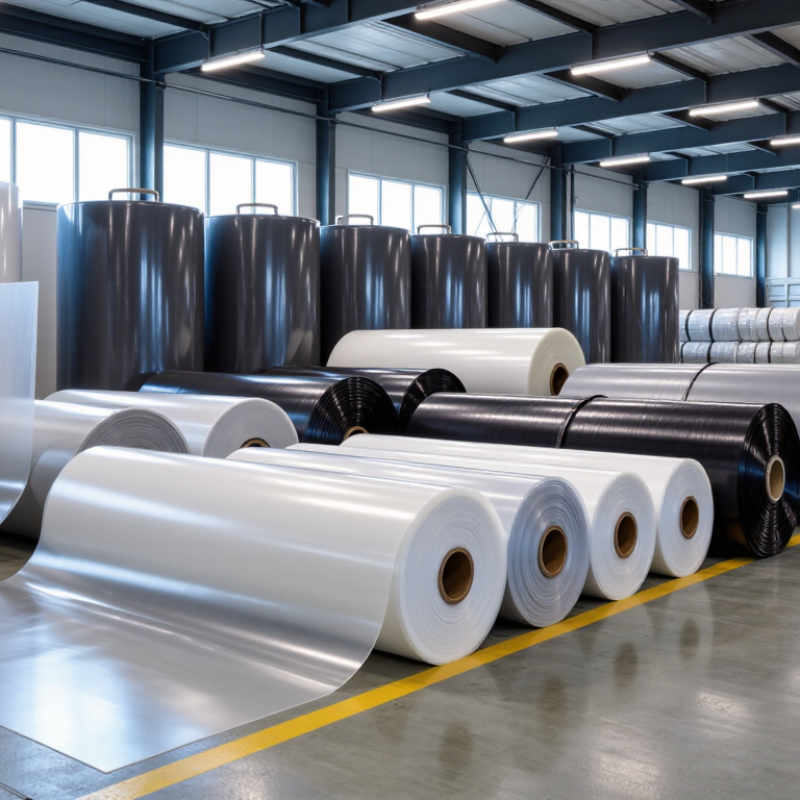
Polyethylene sheet begins as a thermoplastic resin made from ethylene. It starts with pellets. Heat softens them until they can flow through a flat die, forming a continuous sheet. Cooling rolls set the thickness and help create a smooth surface. The sheet is then trimmed and checked for dimensions and visible defects.
Different resin grades produce different results. HDPE is generally stiffer, while LDPE is more flexible. LLDPE can offer a useful balance of flexibility and toughness. These are tendencies, not guarantees. The final behavior also depends on sheet thickness, processing conditions, and any added colorants or stabilizers. Small details matter.
Production sounds tidy, but real lines have trade-offs. Even a well-run process can leave slight thickness variation or surface marks, so buyers should ask about tolerances and inspection methods. Recycled content may also vary between batches, depending on its source and preparation. That deserves honest discussion. A sample can help confirm how a sheet bends, cuts, or handles the intended use, but one sample cannot represent every future batch. Clear specifications make comparisons more reliable.
Polyethylene sheet is a family of materials, not a single grade. HDPE and MDPE offer greater stiffness; LDPE bends more easily, while LLDPE often suits flexible applications. UHMWPE is chosen where exceptional abrasion resistance matters. Sheets may be smooth, textured, embossed, or UV-stabilized. Thickness, surface finish, and additives can change performance significantly. Small details matter.
PlasticsEurope’s Plastics – the Fast Facts 2024 reports 413.8 million tonnes of global plastics production in 2023. Its breakdown assigns about 27.7% to LDPE/LLDPE and HDPE/MDPE combined. This broad supply supports many sheet formats, but availability and specifications vary by market. I would not treat the grade name alone as a guarantee: resin formulation, recycled content, and manufacturing tolerances can differ. Ask suppliers for a technical data sheet and test results tied to the offered material.
Tips: Match the sheet to its job. For a chemical-storage liner, verify chemical compatibility and thickness; for an outdoor panel, check UV stabilization. Confirm dimensions, tolerances, operating temperature, and surface finish in writing. A sample is useful, though it cannot replace documented testing.
Available grades and sheet types vary by supplier and specification. The chart compares typical resin density ranges, in g/cm³.
How to choose: HDPE is generally stiffer, while LDPE and LLDPE are generally more flexible. Common sheet options include smooth, textured, UV-stabilized, and colored sheets. Match the grade and sheet type to the application, operating conditions, and required specification; density ranges are typical and may vary by resin.
Polyethylene sheet service life depends on grade, thickness, load, and exposure—not simply “HDPE” or “LDPE” on an invoice. Higher-density grades are generally stiffer, while lower-density grades flex more readily; neither suits every job. Under a loaded pallet, a thin sheet may creep gradually despite acceptable short-term tensile results. ASTM D638 measures tensile properties, but cannot alone predict years of outdoor service. ASTM D1693 can help assess environmental stress-cracking resistance. Ask for tests on the actual grade and thickness.
Sunlight, temperature swings, and cleaning chemicals can change performance. For an outdoor enclosure, check whether the sheet includes UV protection; for a cold warehouse, assess impact resistance at the expected temperature. PlasticsEurope’s Plastics—The Fast Facts 2024 reports 413.8 million tonnes of global plastics production in 2023, but this scale does not make grades interchangeable. Compare supplier test data, tolerances, and intended-use conditions. A useful caution: no single lab number gives a dependable service-life forecast. Field exposure still matters.
Choosing polyethylene sheet starts with the job, not the material name. For tanks, guards, and food-handling surfaces, HDPE is often a practical choice because it resists moisture and many common chemicals. Check the chemical concentration and operating temperature against supplier data; resistance is not universal. Outdoors, ask whether the sheet includes UV protection. Sun exposure can make an unsuitable grade brittle over time.
For sliding wear strips, chute liners, or parts that take repeated impact, UHMW-PE may last longer. Its low-friction surface helps materials move, but it can be harder to machine precisely and may cost more. LDPE is softer and more flexible, which can suit covers or light-duty liners. It is not a substitute for a stiff, load-bearing panel. There is no perfect sheet.
The environment changes the decision. A sheet stored in a hot shipping container may warp if it is unsupported, and polyethylene can creep under steady load. Compare thickness, flatness tolerance, and temperature limits, not just price per sheet. Ask for a technical data sheet and, for a critical fit, test a sample in the actual assembly. A small trial can reveal a mismatch that a clean product photo cannot. Also consider how the sheet will be cut and fastened; tight holes can become stress points.
“Best” depends on the job, not the resin name alone. A greenhouse cover, pond liner, and protective construction sheet face different stresses. Compare polyethylene type, thickness tolerance, roll width, UV exposure, and puncture resistance. Ask for test results, not just a product sheet. ASTM D882 measures tensile properties; ASTM D1709 assesses impact resistance. Confirm that suppliers use comparable methods and report units clearly.
Supply context matters, too. PlasticsEurope’s Plastics—The Fast Facts 2024 estimates global plastics production reached 413.8 million tonnes in 2023. That figure covers all plastics, not polyethylene sheet, but it shows why material traceability deserves attention. The OECD’s Global Plastics Outlook projects global plastics use could nearly triple by 2060 under current policies. For buyers, recycled content, batch consistency, and documented quality controls are practical comparison points. Small details matter: a 0.1-millimetre thickness variation can affect installation and service life. I would also check sample rolls before placing a large order. It takes time. Freight terms and packaging protection matter as well; a well-priced roll arriving crushed is not a bargain.
HDPE and MDPE are generally stiffer. LDPE bends more easily, while LLDPE often suits flexible uses. UHMWPE resists abrasion well. Smooth, textured, embossed, and UV-stabilized sheets are also available.
Start with the load, exposure, and required flexibility. A chemical-storage liner needs verified chemical compatibility. An outdoor panel needs suitable UV protection. The grade name alone is not enough.
Not necessarily. Thickness, load, temperature, and exposure all matter. A thin sheet under a loaded pallet may slowly creep, even if its short-term test results look acceptable. That detail is easy to overlook.
For outdoor use, confirm UV stabilization. For a cold warehouse, check impact resistance at the expected temperature. Temperature swings and cleaning chemicals can also affect performance.
Ask for tensile, impact, and stress-cracking results for the actual grade and thickness. Confirm test methods and units. One laboratory number cannot reliably predict years of service.
Compare sheet type, thickness tolerance, roll width, puncture resistance, recycled content, and batch consistency. Check packaging and freight terms, too. A crushed roll is no bargain.
No. A sample can help you inspect the surface and handling, but it cannot replace documented specifications and test results. I might rely on samples too much otherwise.
Even a 0.1-millimetre variation can affect fitting and service life. Confirm dimensions and tolerances in writing before a large order. Small details matter.
Choosing the best Polyethylene Sheet in 2026 starts with understanding how sheets are made and how different grades and formats serve different purposes. Variations in density, thickness, surface finish, and additives can influence strength, flexibility, chemical resistance, moisture protection, and wear life. These properties determine whether a sheet is better suited to fabrication, protective lining, packaging, construction, or other uses.
Global buyers should match the sheet’s performance to its application, operating environment, and expected service life rather than selecting by price alone. When comparing suppliers, assess material specifications, dimensional consistency, quality controls, customization options, production capacity, lead times, packaging, and total delivered cost. Clear requirements and comparable quotations make it easier to identify a dependable sheet that balances performance, durability, and value across different markets.

Beyond