Global projects demand materials that perform consistently across different climates, transport routes, and installation practices. Hdpe Plastic Board offers a practical balance of strength, chemical resistance, and low moisture absorption. It is often selected for protective liners, fabricated panels, machine guards, marine components, and construction applications. Its smooth surface also supports easier cleaning in demanding work environments.
Field experience shows that material performance depends on more than a product name. Thickness, density, temperature range, fastening methods, and fabrication quality can change the final result. A board stored beside a hot shipping container may behave differently from one kept indoors. This detail is easy to overlook. Reliable suppliers should provide technical data, batch information, processing guidance, and relevant independent test results. Project teams should also compare these documents with local specifications and environmental conditions.
Hdpe Plastic Board is durable, but it is not flawless. It can expand with temperature changes, and some grades may not suit high-load or high-temperature applications. That assumption deserves questioning. Careful design, accurate cutting, suitable joining methods, and routine inspection remain essential. When engineers combine documented material properties with hands-on installation knowledge, the board becomes more than a generic plastic sheet. It becomes a dependable component within a controlled project system, supporting safer decisions, predictable maintenance, and longer service life across international applications.
What Is HDPE Plastic Board?
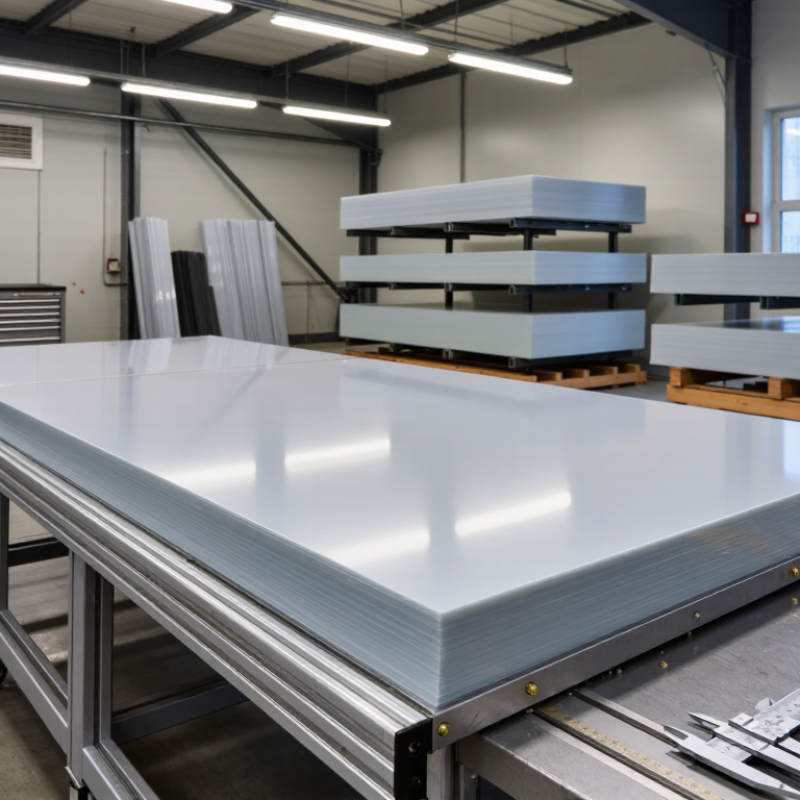
HDPE plastic board is a solid sheet made from high-density polyethylene resin. Its polymer chains are tightly arranged, creating a strong, moisture-resistant material. Manufacturers form the resin through extrusion, then cut the sheet into required sizes. The surface may be smooth, textured, or lightly finished for safer handling.
For global projects, HDPE board is often selected for its balance of strength, low weight, and chemical resistance. It does not absorb water like untreated wood. It also resists many salts, cleaning agents, and industrial liquids. These qualities support uses such as protective wall panels, equipment liners, fabricated tanks, cutting surfaces, and outdoor components. In practical installation work, crews appreciate that sheets can be drilled, welded, and moved without heavy lifting equipment.
Still, HDPE is not a universal solution. It expands and contracts with temperature changes, so installers should allow suitable movement gaps. Direct sunlight can also affect long-term performance unless the grade includes appropriate ultraviolet protection. A detail is easy to miss. Fasteners, edge design, and support spacing can determine whether a board performs well.
Material selection should consider thickness, density, operating temperature, load, and chemical exposure. Project teams should request technical data and verify testing methods before specifying a sheet. Local climate matters too. A design that works beside a cool warehouse may deform near hot machinery. The material is dependable, but only when its limits are treated seriously.
Key Properties of HDPE Plastic Board
Why Choose HDPE Plastic Board for Global Projects?
HDPE plastic board is valued for practical performance in demanding environments. Its low density makes handling easier, especially where crews move large panels manually. The material resists moisture, many chemicals, and repeated impact. That combination supports use in water treatment areas, transport facilities, agricultural structures, and protective linings.
On site, the smooth surface usually cleans quickly after contact with mud, oil, or process residue. HDPE also has low water absorption, so swelling is limited in wet conditions. Properly specified grades can include UV protection for outdoor exposure. Still, it is not a perfect material. Heat can cause expansion, and prolonged sunlight may reduce performance without stabilization. I would check temperature ranges, load requirements, and fixing methods before approval. A board that looks suitable may deform when poorly supported. Welding can create durable joints, but workmanship matters greatly.
Tips: Measure the installation area twice. Leave room for thermal movement. Store boards flat and away from direct sunlight before installation. Confirm chemical compatibility using current technical data, not assumptions. For global projects, request consistent thickness tolerances and test certificates from the supplier. Recycling options also vary by region, so plan collection and reuse early. A small sample test can reveal surface scratches, bending, or fitting problems before shipment.
Benefits for Global Construction and Industrial Projects
HDPE plastic board supports demanding construction and industrial projects because it combines low weight with practical durability. Its density typically ranges from 0.94 to 0.97 g/cm³, according to ASTM D792 testing. Crews can cut, drill, and weld it with common workshop equipment. That reduces handling effort at remote sites.
It resists moisture, many chemicals, and repeated washing. ASTM D570 data also shows very low water absorption for polyethylene, often near 0.01% over 24 hours. This helps in drainage channels, protective linings, temporary road panels, and industrial work surfaces. A smooth board is easier to clean after contact with mud, oils, or process residue. That matters.
Global projects still face uneven climates and maintenance skills. HDPE does not rust, but sunlight, heat, and heavy point loads can reduce service life. Designers should request UV-stabilized grades and verify performance under ASTM D638 or ISO 527 tensile testing. Thickness and support spacing need site-specific review. A thin board may flex more than expected.
The United Nations Environment Programme reported in 2023 that better plastic management could reduce global plastic pollution by 80% by 2040. Selecting reusable boards can support that direction, although recycling access varies widely between regions. I would not specify HDPE automatically. Fire requirements, thermal expansion, local recovery systems, and end-of-life handling still deserve honest evaluation.
How HDPE Plastic Board Supports Sustainable Development
HDPE plastic board supports sustainable development through long service life, practical reuse, and reduced maintenance. On construction sites, it withstands moisture, impact, and repeated handling. That durability can prevent frequent replacement, especially in humid or demanding environments.
It lasts for years.
In global projects, lighter boards can reduce transport weight and simplify installation. Workers may also cut, clean, and reuse suitable panels during temporary applications. Unlike materials vulnerable to rot, HDPE does not absorb water easily. This helps protect structures and limits waste caused by swelling or decay.
Sustainability still requires careful planning. Recycled HDPE content can reduce demand for new resources, but its quality must suit the project. Collection and recycling systems also differ widely between regions. A board sent to landfill does not deliver its full environmental value. Designers should consider local recovery options before specifying it.
Project teams can improve reliability by checking load requirements, temperature exposure, slip resistance, and expected service life. Field experience shows that small installation errors may shorten performance. Proper fastening and clean cutting matter. HDPE is not a perfect material, and that should be acknowledged. Yet, when selected for the right conditions, it can support durable infrastructure with fewer replacements and more responsible resource use.
Why Choose HDPE Plastic Board for Global Projects? - How HDPE Plastic Board Supports Sustainable Development
| Project Dimension |
Typical HDPE Board Data |
Relevance to Global Projects |
Important Consideration |
| Density and handling |
Approximately 0.93–0.97 g/cm³ for common HDPE grades |
Low density can make boards easier to handle and may reduce material weight compared with many metal components of similar volume. |
Actual transport savings depend on board thickness, design, packaging, and shipping route. |
| Tensile strength |
Common grades are typically in the approximate range of 20–37 MPa. |
Can suit fabricated panels, liners, and components where impact resistance and moderate structural strength are needed. |
Values vary by grade and test method; structural applications require design checks for load, creep, and temperature. |
| Moisture absorption |
Typically very low; many sheet grades report water absorption below 0.01% over 24 hours. |
Useful for wet environments and applications where moisture-related swelling should be limited. |
Check the supplier’s test method and grade-specific technical data for the project specification. |
| Corrosion and chemical exposure |
Does not rust; generally resists water, many salts, and a range of acids and alkalis. |
May be suitable for water-related, agricultural, and industrial settings where corrosion resistance can help reduce maintenance needs. |
Chemical compatibility is substance-, concentration-, temperature-, and stress-dependent; verify before use. |
| Outdoor and UV exposure |
UV-stabilized grades are available; unprotected HDPE can degrade with prolonged sunlight exposure. |
Grade selection can support outdoor use across different climates and sunlight conditions. |
Specify UV stabilization and confirm expected service conditions with the material supplier. |
| Recycling identification |
HDPE is identified by resin identification code 2. |
Clear material identification can help with sorting and end-of-life planning. |
Recyclability in practice depends on local collection, sorting, processing capacity, and whether the board is contaminated or combined with other materials. |
| Resource efficiency and reuse |
Boards can be cut and fabricated to project dimensions; offcuts may be reusable or recyclable where suitable facilities exist. |
Careful sizing and design for disassembly can help limit avoidable material waste on projects. |
Waste reductions depend on design, fabrication practices, and local end-of-life options. |
Note: Figures are indicative ranges for common HDPE materials, not guaranteed specifications. Confirm grade-specific properties and applicable test methods before procurement or engineering use.
Selection, Processing, and International Applications
Why Choose HDPE Plastic Board for Global Projects?
Selection, Processing, and International Applications
Selecting HDPE plastic board begins with load, temperature, chemical exposure, and service life. According to the OECD’s Global Plastics Outlook, global plastic waste reached 353 million tonnes in 2019, while only 9% was recycled. Material efficiency matters. HDPE offers low moisture absorption, strong impact resistance, and a density near 0.95 g/cm³. These properties suit protective liners, fabricated tanks, marine panels, and transport components. However, grade selection cannot rely on density alone. UV exposure, weldability, stiffness, and recycled content can change field performance.
Processing requires disciplined control. CNC cutting can produce clean edges, but heat buildup may distort thin boards. Fabricators often use moderate cutting speeds, sharp tools, and supported work surfaces. Butt fusion and extrusion welding need compatible grades and controlled temperatures. ASTM D638 tensile testing and ASTM D790 flexural testing provide useful comparison points. Still, laboratory results do not perfectly predict outdoor service. Real projects include dust, vibration, uneven foundations, and rushed installation.
International applications demand practical documentation. A project team should confirm thickness tolerances, flame performance, chemical resistance, and local shipping requirements before purchase. The UNEP report Turning off the Tap identifies better product design and circular systems as major waste-reduction priorities. Recycled HDPE may support that direction, but contamination and inconsistent properties remain concerns. No selection checklist is perfect. Engineers should inspect sample panels, test joints, and record actual site conditions before approving full production.
Typical HDPE board thickness varies by application: thin sheets are commonly used for lightweight protection and fabrication, while thicker boards are selected for tank liners, marine components, and heavy-duty wear surfaces. Actual specifications should be confirmed against the project load, temperature, chemical exposure, fabrication method, and applicable regional standards.
Conclusion
Hdpe Plastic Board is a durable sheet material made from high-density polyethylene, valued for its balance of strength, low weight, and practical versatility. Its resistance to moisture, corrosion, many chemicals, and everyday impacts makes it suitable for demanding construction and industrial environments. Easy to cut, machine, and fabricate with appropriate equipment, it can be adapted for protective linings, covers, components, and other project-specific uses.
For global projects, Hdpe Plastic Board can help reduce maintenance needs and support reliable performance across varied climates and operating conditions. Its long service life and potential for reuse or recycling can also contribute to more resource-conscious development. Choosing the right grade, thickness, and finish depends on the application, expected loads, exposure, and fabrication requirements. Careful planning for processing, transport, and installation helps ensure that the material meets the practical needs of projects in different regions.

 Beyond