Choosing a reliable Hdpe Cutting Board supplier requires more than comparing catalog prices. Global buyers need consistent material quality, clear specifications, and dependable export performance. This guide introduces ten suppliers with practical details for professional evaluation.
Each company is considered through manufacturing experience, product range, customization capability, and documented quality controls. Important factors include HDPE density, board thickness, surface finish, food-contact compliance, and dimensional stability. A 20-millimeter board may suit light preparation, while commercial kitchens often require thicker, heavier formats. Some suppliers offer CNC cutting, color coding, engraved logos, or custom packaging. These services can reduce installation work and simplify inventory management.
Supplier reliability also depends on evidence. Buyers should request test reports, factory photographs, sample boards, production lead times, and references from comparable markets. Packaging matters too. Poorly protected edges may arrive scratched after a long ocean shipment. Minimum order quantities, payment terms, replacement policies, and communication speed deserve equal attention. Not every supplier performs equally well in every category. A company with excellent machining may still provide limited documentation. Another may offer attractive pricing but inconsistent thickness. That weakness should not be hidden. This overview encourages careful comparison, direct questions, and sample testing before large orders. It is a practical starting point, not a substitute for independent inspection.
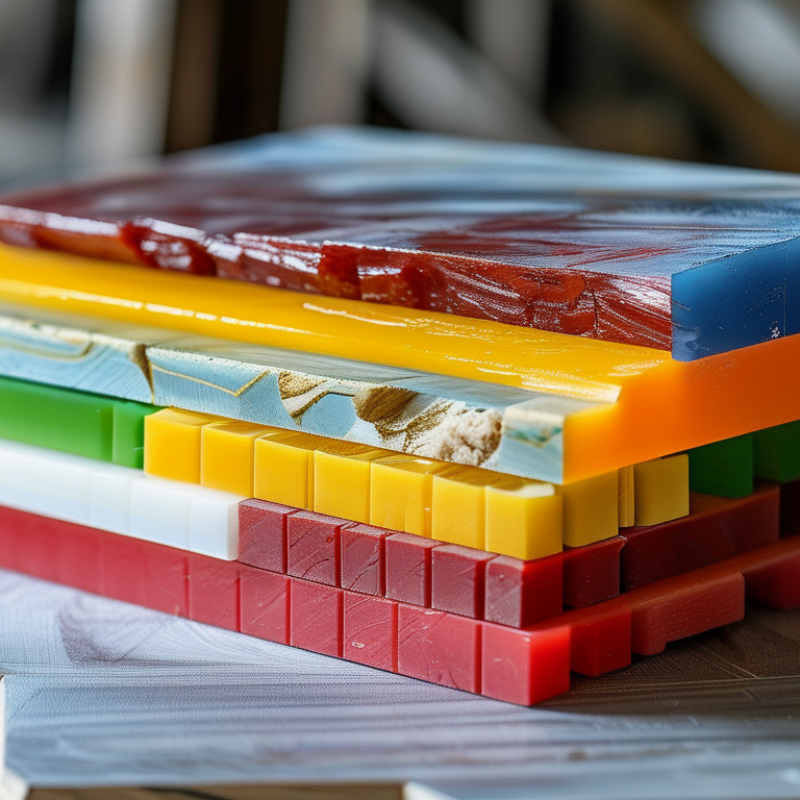
HDPE cutting boards are rigid, food-contact work surfaces made from high-density polyethylene. Their tight molecular structure resists moisture, many household chemicals, and repeated washing. The material is also relatively lightweight. A 600 × 400 mm board can be moved easily around a busy preparation area. It does not absorb liquids like unfinished wood can. That matters when buyers manage meat, seafood, vegetables, or commercial kitchens.
Global buyers choose HDPE because it balances hygiene, durability, and cost. Grand View Research valued the global HDPE market at about USD 79 billion in 2023 and expects continued growth through 2030. This broader figure does not measure cutting boards directly. Still, it shows the material’s strong industrial supply base.
Buyers should request food-contact declarations, migration test results, and batch traceability. In the United States, compliant applications may reference 21 CFR 177.1520, but not every HDPE product automatically meets it.
Practical testing remains important. Check board thickness, edge finishing, flatness, and resistance to knife scoring. A board that warps after hot washing creates a real safety problem. It is easy to overvalue low prices. I have seen specifications look excellent until wet hands exposed a slippery surface or poor drainage. The best supplier should provide consistent dimensions, packaging details, and replacement guidance. Certification helps, but it never replaces a careful sample inspection.
When comparing HDPE cutting board suppliers, start with material evidence, not catalog photos. Ask for food-contact compliance documents, resin grade, density, and production-batch records. Virgin or controlled-recycled HDPE can affect odor, color stability, and surface wear. Request a sample.
Measure twice. Check length, width, thickness, flatness, and edge tolerance with simple tools. A board advertised at 20 millimeters may arrive slightly thinner after cooling. This matters for commercial kitchens, butcher tables, and machine-cut applications. Review impact resistance, operating temperature, moisture absorption, and resistance to common cleaning agents. Suppliers should explain their test methods, not only provide attractive figures.
I also compare surface texture, color consistency, drainage grooves, handle strength, and custom machining accuracy. A supplier serving global buyers should offer secure export packaging, clear lead times, and traceable batch labels. Confirm minimum order quantities, replacement procedures, and inspection options before payment.
Communication reveals experience. Can the sales team answer technical questions without guessing? Can the factory share dimensional reports and sample approval records?
Low prices deserve closer inspection. I have seen minor warping become expensive after installation. No checklist catches everything. Ask for independent testing when the application carries higher hygiene or durability demands. Supplier reliability is built through repeatable specifications, transparent records, and realistic promises.
Top 10 HDPE Cutting Board Suppliers for Global Buyers
Selecting among the top 10 HDPE cutting board suppliers requires more than comparing prices. Experienced buyers check material consistency, edge finishing, thickness, and production capacity. A reliable supplier should provide clear technical sheets, batch records, and food-contact documentation for the target market. Board dimensions must remain stable after repeated washing and temperature changes. Small details matter, especially for commercial kitchens.
Request samples before placing a large order. Test them on a stainless-steel worktable, inspect knife marks, and measure warping after several cleaning cycles. Ask about minimum order quantities, carton strength, pallet design, and replacement policies. Suppliers with stable export experience usually explain these points directly. However, no supplier is perfect. Some impressive samples may hide slower production during peak seasons. That risk deserves written confirmation.
Tips: Compare at least three samples. Check weight and thickness with simple tools. Confirm color consistency across batches. Ask whether custom logos affect delivery time. Review the packaging photographs, not only the quotation. A useful supplier can discuss tolerances without avoiding difficult questions. Keep communication records, because memory becomes unreliable during long projects. Price still matters, but a low quote may reflect thinner boards, weaker cartons, or limited inspection. I would also request a pre-shipment inspection, although this step can feel excessive for smaller orders. It sometimes prevents expensive surprises.
Supplier-neutral comparison of common HDPE cutting board thicknesses and calculated material mass.
The chart uses ten commonly specified thicknesses from 3 mm to 30 mm. Material mass is calculated per square meter using a nominal HDPE density of 0.95 g/cm³, within the typical density range of commercial HDPE. Actual finished-board weight may vary because of size, surface texture, colorants, and manufacturing tolerances.
Top 10 HDPE Cutting Board Suppliers for Global Buyers
Reliable HDPE cutting board suppliers should prove more than attractive product photos. Their factories need documented material controls, dimensional checks, and hygienic production practices. PlasticsEurope’s Plastics—The Facts 2023 reported global plastics production of 400.3 million tonnes in 2022. That scale makes resin traceability essential. Buyers should request resin batch records, food-contact declarations, and supplier change-control procedures.
Certification matters, but certificates require context. NSF/ANSI 2 supports hygiene requirements for food equipment and utensils, while FDA food-contact compliance may apply to products entering the United States. ISO’s 2023 survey recorded more than 1.2 million ISO 9001 certificates worldwide, showing how common quality systems have become. It does not prove every board is safe or durable. Verify the certificate scope, issuing body, factory address, and expiry date.
Ask suppliers how they control warping, thickness tolerance, surface scratches, and edge finishing. A practical inspection can include caliper measurements, visual checks under strong light, and odor evaluation after washing. Some suppliers test migration, hardness, and cleanability through independent laboratories. Good records should connect each shipment to its production batch. Small gaps matter. I have seen specifications that promised “commercial grade” without defining thickness or polymer grade. That wording needs challenge. A stronger supplier shares inspection reports, corrective-action records, and sample retention policies before purchase approval.
When comparing the top 10 HDPE cutting board suppliers, global buyers should examine the full landed cost. Ask for pricing at several order quantities, not only the lowest sample quote. Include tooling, packaging, inspection, freight, duties, and payment fees. A low unit price can hide expensive transport or weak packaging. Pricing needs context.
Customization should cover thickness, dimensions, colors, edge profiles, surface texture, drainage grooves, and private labeling. Request a physical sample or detailed production drawing before approval. Confirm food-contact material documentation, dimensional tolerance, and color consistency. One millimeter of warping can affect kitchen stability. Small details matter.
Logistics reliability deserves practical testing. Check production lead times, carton strength, pallet loading, export experience, and tracking procedures. Ask how suppliers handle damaged cartons, delayed vessels, or incorrect quantities. After-sales support should include a named contact, response targets, replacement rules, and evidence records such as photos and inspection reports. In sourcing work, written promises are useful, but measurable procedures are stronger. I would not rely on a polished catalog alone. Some evaluations also overlook seasonal factory delays, which can disrupt launch schedules. Leave time for correction.
| Rank | Anonymized Supplier Profile | Typical Product Scope | Indicative FOB Price 400 × 300 × 12 mm |
Standard MOQ | Customization Capability | Sample Lead Time | Bulk Lead Time | Export & Logistics Support | After-Sales Support | Evaluation Score |
|---|---|---|---|---|---|---|---|---|---|---|
| 1 | Profile A — High-Volume Integrated Manufacturer | Food-service boards, butcher blocks, bakery boards, color-coded commercial sets | US$3.20–4.60 / pc | 500 pcs | Logo engraving, private packaging, custom colors, thickness and dimensions | 5–8 days | 18–25 days | FOB, CIF and DDP quotations; export cartons and pallet loading available | Pre-shipment inspection, replacement for verified defects, response within 1 business day | 9.2/10 |
| 2 | Profile B — Custom Fabrication Specialist | Non-standard shapes, drainage boards, inserts and heavy-duty cutting surfaces | US$4.10–6.80 / pc | 300 pcs | High flexibility for CAD shapes, CNC routing, holes, grooves and color matching | 7–12 days | 25–35 days | Can coordinate freight forwarders, consolidated shipments and export documentation | Engineering revision support and documented corrective-action process | 9.0/10 |
| 3 | Profile C — Food-Contact Compliance Focused | Commercial kitchen boards, HACCP-oriented color systems and food-processing components | US$4.00–5.90 / pc | 1,000 pcs | Color coding, printed marks, private labels and standard size adjustments | 5–10 days | 20–30 days | Provides material declarations and carton specifications; supports FOB and CIF shipments | Batch traceability, inspection records and claim handling with photographic evidence | 8.9/10 |
| 4 | Profile D — Retail and Private-Label Supplier | Household boards, gift sets, retail-ready packs and e-commerce assortments | US$4.60–7.50 / pc | 500 pcs | Retail packaging, barcode labels, inserts, sleeves, bundles and logo printing | 7–14 days | 25–40 days | Carton drop-test coordination, container loading plans and DDP support by destination | Packaging artwork revisions and replacement or credit options for confirmed defects | 8.7/10 |
| 5 | Profile E — Contract Manufacturing Partner | OEM boards, institutional supply programs and repeat replenishment orders | US$3.70–5.40 / pc | 1,500 pcs | Stable repeat production, tooling support, custom dimensions and controlled specifications | 6–10 days | 18–28 days | Container planning, commercial invoices, packing lists and origin-document support | Dedicated account contact, reorder forecasts and production issue escalation | 8.6/10 |
| 6 | Profile F — Small-Batch Flexible Supplier | Prototype boards, hospitality orders, specialty colors and limited-edition products | US$5.20–8.90 / pc | 100 pcs | Low-volume customization, laser marking, simple shapes and mixed-color orders | 3–7 days | 15–25 days | Courier samples, LCL consolidation and standard export packaging available | Fast communication and flexible replacement for transit or manufacturing damage | 8.4/10 |
| 7 | Profile G — Cost-Optimized Volume Supplier | Standard rectangular boards, food-service packs and price-sensitive wholesale programs | US$2.80–4.10 / pc | 2,000 pcs | Basic logo, standard colors, dimensions and polybag or carton packaging | 5–8 days | 20–30 days | FOB and CFR quotations; optimized carton quantities for container utilization | Standard inspection procedure and replacement or credit subject to claim review | 8.2/10 |
| 8 | Profile H — Regional Distribution-Oriented Supplier | Standard and premium boards stocked for distributors, restaurants and catering buyers | US$4.80–7.20 / pc | 250 pcs | Limited private labeling, carton configuration and selected color options | 2–5 days | 10–20 days from stock or 25–35 days made to order | Local warehousing, air freight and parcel delivery; useful for urgent replenishment | Local-language support and simplified returns for stocked items | 8.0/10 |
| 9 | Profile I — Sustainable Packaging and Materials Focused | Durable HDPE boards, recyclable packaging programs and long-life commercial products | US$4.50–6.90 / pc | 800 pcs | Recyclable packaging, thickness options, embossing and documented material selection | 7–12 days | 25–35 days | Palletized export packing, container loading plans and carbon-data requests by project | Material documentation, production records and structured quality-claim review | 7.9/10 |
| 10 | Profile J — Premium Hospitality and Design Supplier | Thick presentation boards, serving boards, premium sets and design-led hospitality items | US$6.50–11.50 / pc | 200 pcs | Complex profiles, premium packaging, engraved logos, gift sets and custom finishes | 10–15 days | 30–45 days | Air, sea and courier options; supports fragile premium-packaging handling requirements | Pre-production approval, inspection photos and dedicated project coordination | 7.8/10 |
It is a rigid food-contact surface made from high-density polyethylene. It resists moisture and many household chemicals. A 600 × 400 mm board remains easy to move. It does not absorb liquids like unfinished wood.
They balance hygiene, durability, weight, and cost. They suit meat, seafood, vegetables, and repeated washing. That balance matters. However, performance depends on thickness and manufacturing quality.
Request food-contact declarations, migration test results, and batch traceability records. Ask whether documents match the target market. Not automatically. A material may be HDPE without meeting every food-contact requirement.
Place the board on a stainless-steel worktable. Measure thickness and check flatness with simple tools. Inspect edges, surface texture, and knife scoring. Wet hands may reveal unexpected slipperiness.
Heat and temperature changes may cause warping. A warped board can move during cutting. That creates a practical safety concern. Test several cleaning cycles before ordering.
Compare the full landed cost, not only the unit price. Include tooling, packaging, inspection, freight, duties, and payment fees. A cheap quote may hide thinner boards. It may also include weaker cartons or limited inspection.
Confirm thickness, dimensions, colors, edge profiles, texture, and drainage grooves. Discuss private labeling separately. One millimeter matters. Request a physical sample or production drawing before approval.
Confirm lead times, carton strength, pallet loading, and shipment tracking. Ask how damaged cartons and incorrect quantities are handled. Require a named contact and written replacement rules. Peak-season delays remain possible, even with promising samples. I would leave correction time.
This guide explains what an Hdpe Cutting Board is and why global buyers choose it for food preparation, commercial kitchens, hospitality, and industrial applications. Known for durability, moisture resistance, easy cleaning, and reliable performance, HDPE boards can be evaluated through key specifications such as thickness, dimensions, density, surface finish, color options, temperature resistance, and compliance with relevant food-contact requirements. The article also presents a practical selection of ten supplier types and profiles for international purchasing, focusing on production capability, consistency, and export readiness rather than brand promotion.
It further examines how buyers can assess manufacturing standards, certifications, inspection procedures, material traceability, and quality-control systems. In addition, the guide outlines effective ways to compare pricing, minimum order quantities, customization options, packaging, lead times, shipping arrangements, and after-sales support. By considering these factors together, global buyers can identify dependable suppliers, reduce purchasing risks, and select Hdpe Cutting Board products that meet their operational, quality, and logistical requirements.

Beyond