How to Choose Polyethylene Rolls in 2026

Time:2026-09-30 Author:Oliver
0%

Choosing Polyethylene Rolls in 2026 requires more than comparing prices per kilogram. The right roll must match the application, equipment, storage conditions, and expected service life. A packaging manager may need a thin, flexible film for wrapping pallets. A construction team may require thicker material that resists punctures, moisture, and rough handling. These needs look similar on a product page, but they perform very differently in practice.

Start by checking thickness, roll width, length, density, tensile strength, and tear resistance. Ask whether the material is virgin, recycled, or blended polyethylene. Each option affects clarity, strength, consistency, and sustainability claims. Measure the actual load or surface before ordering. A roll that seems affordable can create waste if it requires frequent replacement. Not every low-price roll saves money. Supplier documentation also matters. Request technical data sheets, batch information, test methods, and relevant compliance statements for your intended use. Food-contact, medical, and industrial applications may require different standards in different markets. Verify those requirements with qualified professionals before purchase.

Real-world testing remains valuable. Place a sample roll near your machinery, then observe feeding, stretching, sealing, and tearing. Check performance after exposure to heat, cold, sunlight, or humidity. Small flaws often appear during handling, not during inspection. This guide explores the factors that can make Polyethylene Rolls more reliable in 2026. It also considers newer recycled-content options, supply stability, total cost, and practical supplier evaluation. Some recommendations may not fit every operation. That is worth acknowledging. Careful selection depends on evidence, honest specifications, and lessons from actual use.
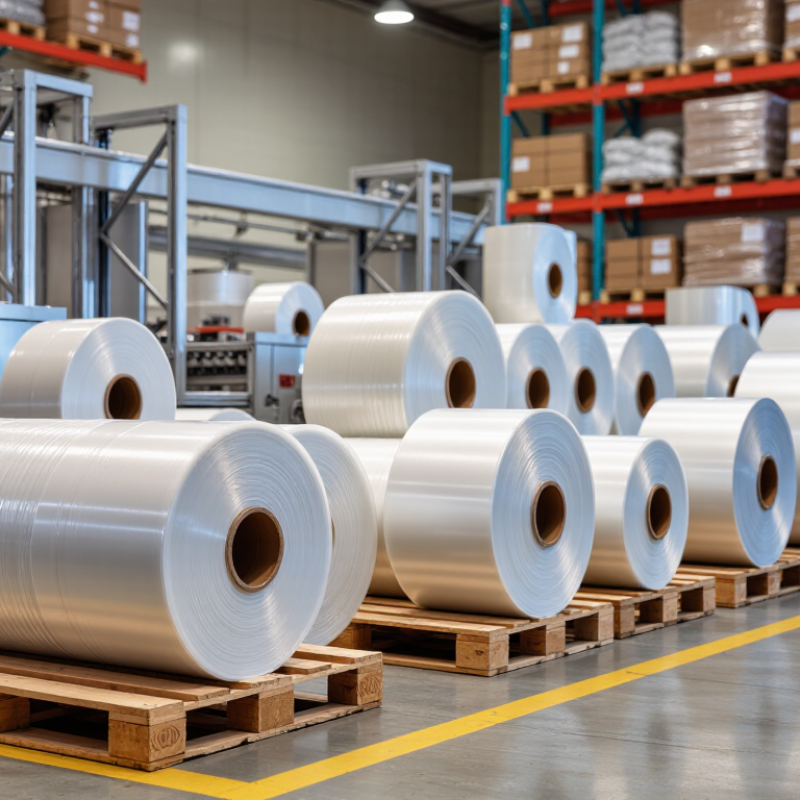
How to Choose Polyethylene Rolls in 2026

Polyethylene Roll Basics: Types, Properties, and Common Applications

How to Choose Polyethylene Rolls in 2026

Polyethylene rolls come in several useful forms. Low-density polyethylene feels flexible and stretches around uneven loads. Linear low-density polyethylene usually offers stronger puncture resistance with good flexibility. High-density polyethylene is firmer, less stretchy, and often better for liners or protective sheets. Thickness matters, but it is not the only concern. A thin roll may work for clean indoor wrapping, while a thicker roll suits rough floors, sharp edges, or outdoor storage. Check width, roll length, clarity, slip, and sealing performance before ordering.

Moisture resistance is a major advantage. Polyethylene can protect cartons, equipment, soil, and construction materials from water and dust. Clear film helps workers inspect contents quickly. Opaque film offers privacy and can reduce light exposure. Some applications need ultraviolet resistance, anti-static performance, or controlled breathability. Common uses include pallet covers, greenhouse sheets, temporary floor protection, waste liners, and agricultural ground covers. I once focused too heavily on thickness and overlooked tear direction. That mistake increased material waste.

Tips: Test a small roll first. Pull it across the actual surface. Check punctures, seams, static, and handling comfort. Store rolls away from heat and direct sunlight. Ask for technical data, consistent thickness measurements, and application guidance. If the film will contact food or sensitive goods, verify the relevant compliance documents for your market. Results can vary between production batches, so inspect samples before large purchases.

Define Your Requirements: Thickness, Width, Strength, and Flexibility

How to Choose Polyethylene Rolls in 2026

Define your requirements before comparing polyethylene rolls. Start with thickness, usually measured in microns or mils. Thicker film can resist punctures better, but it may waste material and raise costs. The right choice depends on load weight, edge sharpness, storage time, and handling conditions. PlasticsEurope’s Plastics – the Fast Facts 2024 reports global plastics production at 413.8 million tonnes in 2023. That scale increases pressure to use material more carefully.

Width should match the product and sealing equipment. A roll that is too narrow leaves exposed edges. A roll that is too wide creates trimming waste. Strength is not a single number. Check tensile strength, elongation, tear resistance, and impact performance. ASTM D882 provides a recognized method for testing tensile properties of plastic films. Flexibility also matters. A soft film can wrap irregular shapes closely, while a stiffer grade may hold form better. In practice, I have found that maximum strength is sometimes unnecessary. The first specification is not always the best one.

Tips: Request technical data sheets and recent test results. Compare thickness tolerance, not only the stated average. Test a sample in real conditions, including cold storage and repeated handling. Small differences become obvious quickly. Record failures honestly. A roll that performs well in a laboratory may still frustrate operators. Evaluate the complete application before approving a larger order.

Compare Polyethylene Materials, Grades, and Performance Features

How to Choose Polyethylene Rolls in 2026

Choosing polyethylene rolls starts with the material grade, not the lowest quoted price. Low-density polyethylene offers softness, flexibility, and good moisture resistance for liners and wrapping. Linear low-density polyethylene usually provides better stretch, puncture resistance, and load holding. High-density polyethylene is stiffer and stronger, making it suitable for protective sheets, barriers, and demanding industrial use. Fit matters more.

Compare performance data before ordering. Check thickness, tensile strength, tear resistance, puncture resistance, and elongation. A 100-micron roll can perform very differently from another 100-micron roll. Resin quality, processing, and additives affect the result. Ask for a technical data sheet and sample testing. Do not guess.

Temperature and exposure also shape the decision. Some rolls need UV stabilization for outdoor storage. Others require low-temperature flexibility or controlled static performance. Recycled content may support sustainability goals, but it can change clarity, consistency, and strength. Verify the percentage and test results. A thicker roll is not automatically safer. It may only add cost and waste. I would test a short section under real handling conditions, including stretching, folding, and contact with edges. That practical check often reveals weaknesses that laboratory figures miss. Availability matters too, because an excellent specification is less useful when replacement supply remains uncertain.

Evaluate Suppliers, Pricing, Quality Standards, and Sustainability

How to Choose Polyethylene Rolls in 2026

Supplier evaluation should begin with evidence, not attractive quotations. Request resin origin, production capacity, lot traceability, and recent test records. Confirm thickness tolerance, width consistency, tensile strength, dart impact, and friction performance. ASTM D882, ASTM D1709, and ASTM D1894 can support practical comparisons. A supplier should explain its quality system clearly. ISO 9001 certification helps, but it does not replace product testing. I would still inspect samples from several production lots.

Tips: Compare delivered cost, not only price per kilogram. Include freight, minimum order quantities, slitting fees, and expected waste. A very low quote may hide unstable thickness or delayed shipments. Ask for three samples. Test them under actual temperature, load, and sealing conditions.

Sustainability needs measurable proof. PlasticsEurope reported global plastics production at 400.3 million tonnes in 2022. The OECD’s Global Plastics Outlook projects plastic waste could nearly triple by 2060 without stronger action. Therefore, ask about post-consumer recycled content, renewable energy use, scrap recovery, and material efficiency. Require recycled-content verification and chain-of-custody documents where claims affect purchasing decisions. Lightweighting can reduce material use, but thinner film may tear during handling. That trade-off is easy to underestimate. A life-cycle assessment can clarify it, although results depend heavily on assumptions and regional electricity data. Choose the roll that performs reliably, costs transparently, and creates fewer verified impacts.

How to Choose Polyethylene Rolls in 2026

Recommended supplier-evaluation weighting for pricing, quality, supply capability, and sustainability

This procurement framework assigns the greatest weight to measurable quality and compliance. Buyers should verify film thickness tolerance, tensile and tear performance using applicable methods such as ASTM D882 and ASTM D1004, haze with ASTM D1003, and material density with ISO 1183. Pricing should be assessed as total delivered cost, while sustainability should include recycled content, recyclability, and supplier environmental documentation.

Choose the Right Roll and Verify Its Specifications Before Purchase

Choosing a polyethylene roll in 2026 requires more than comparing price and thickness. The OECD’s Global Plastics Outlook reports that global plastic production reached 460 million tonnes in 2019, while plastic waste has doubled since 2000. This pressure makes material efficiency important. Ask for the resin type, roll width, gauge, density, and recycled-content percentage. A roll that looks identical may perform differently under heat, tension, or puncture.

Verify the specification sheet before purchase. Check thickness tolerance, tensile strength, elongation, dart-impact resistance, sealing temperature, and coefficient of friction. ASTM D882 supports tensile testing, while ASTM D1709 measures impact resistance. ISO 4593 provides a recognized method for measuring film thickness. Request recent test results, not only a sales statement. Small details matter. A 20-micron film with uneven gauge can create weak lines during high-speed wrapping. I have seen buyers overlook this and blame the machine later.

Match the roll to its working environment. For dusty warehouses, surface friction affects feeding. For cold storage, impact performance may matter more than clarity. For direct food contact, obtain the applicable compliance declaration before approval. Also confirm the core diameter, winding direction, roll weight, and packaging condition. One imperfect assumption can ruin an otherwise suitable order. If the application changes, repeat the verification; old specifications may no longer be adequate.

How to Choose Polyethylene Rolls in 2026 - Choose the Right Roll and Verify Its Specifications Before Purchase

Typical polyethylene roll specifications and verification points. Actual values should be confirmed against the supplier's current technical data sheet, certificate of analysis, and agreed purchase specification.
Selection Dimension Common Specification or Range Best-Fit Use What to Verify Before Purchase Practical Buying Note
Polyethylene Type LDPE, LLDPE, HDPE, or a blend of polyethylene grades LDPE for flexibility and clarity; LLDPE for toughness and puncture resistance; HDPE for stiffness and higher tensile strength Confirm the resin type, blend ratio if applicable, and whether the material is virgin, recycled, or a controlled combination Do not select by the word “polyethylene” alone because different grades have materially different performance.
Film Thickness Approximately 25–250 micrometres (1–10 mil), depending on the application 25–50 micrometres for light covers or liners; 75–150 micrometres for general protection; 150–250 micrometres for heavier-duty barriers Check nominal thickness, permitted tolerance, and measurement method One mil equals 25.4 micrometres. A thicker film is not automatically better if flexibility, folding, or cost is important.
Roll Width Commonly about 300–3,000 mm; custom widths may be available Choose a width that covers the product or work area with minimal seams and waste Verify usable width, edge trim, width tolerance, and whether the stated width is flat width or lay-flat width For tubing or center-folded film, confirm the lay-flat width and the finished circumference calculation.
Roll Length Often 50–1,000 m per roll, depending on thickness, width, and roll diameter Shorter rolls for manual handling; longer rolls for converting, wrapping, or automated production Confirm net film length, length tolerance, splice policy, and whether the quoted length is estimated or guaranteed Longer rolls can reduce changeovers but may require greater lifting capacity and storage space.
Roll Outside Diameter Commonly about 150–600 mm, subject to core size and winding tension Small diameters for hand use; larger diameters for high-volume production Verify maximum roll diameter, winding tightness, telescoping limits, and handling requirements Make sure the roll fits the dispenser, unwind stand, or converting machine before ordering.
Core Inner Diameter Typical industrial cores include approximately 76 mm, 152 mm, and 305 mm 76 mm for lighter rolls; 152 mm or 305 mm for larger rolls and machine unwinding Match the core inside diameter, core length, wall thickness, and core material to the equipment shaft Core dimensions are not interchangeable even when the film width and thickness are identical.
Film Appearance Clear, translucent, opaque, colored, embossed, or printed Clear film for visibility; opaque film for light blocking or privacy; embossed film where slip or separation is needed Specify haze, color, surface defects, gels, pinholes, streaks, wrinkles, and allowable visual limits Transparency and haze are different properties; request a sample when appearance is critical.
Tensile Strength Common film values may range roughly from 8–35 MPa, depending on resin, orientation, and test direction Higher values are useful where the film must resist pulling during wrapping, lining, or fabrication Confirm test direction, test standard, specimen preparation, and minimum rather than only average values Machine-direction and transverse-direction results can differ substantially in blown or oriented film.
Elongation at Break Often approximately 100–800%, depending on grade and test direction Higher elongation is generally useful for conformity, stretching, and impact absorption Request minimum elongation values in both machine and transverse directions where relevant Elongation should be evaluated together with tensile strength and puncture resistance.
Puncture and Tear Resistance Application-specific; no single universal value applies to all polyethylene rolls Important for construction covers, pallet liners, industrial packaging, and sharp-edged products Ask for the exact puncture and tear test method, direction, sample thickness, and minimum result Thickness alone cannot reliably predict puncture performance because resin type and processing also matter.
Temperature Range Polyethylene remains flexible at low temperatures, but performance depends on grade; prolonged service near its softening range requires validation General packaging, liners, agricultural covers, and temporary protection Confirm minimum and maximum service temperatures, exposure duration, load, and contact conditions Polyethylene is not suitable for every high-temperature application. Test the actual film under the expected conditions.
UV Resistance Standard untreated polyethylene has limited outdoor durability; UV-stabilized grades are available Outdoor covers, agricultural films, temporary roofing protection, and exposed storage Verify UV stabilizer content or rated outdoor service life for the intended climate and exposure Outdoor lifetime varies with sunlight intensity, temperature, film thickness, color, and geographic location.
Slip and Blocking Film may be supplied with slip additives, antiblock additives, or a specified coefficient of friction Slip for easier unwinding and machine handling; antiblock for preventing layers from sticking together Check coefficient of friction, blocking performance, additive type, and compatibility with printing or sealing Excessive slip can reduce sealing or stacking performance, so the surface requirement should match the process.
Food-Contact Suitability Possible for suitable grades manufactured and documented for the applicable jurisdiction Food liners, produce packaging, and food-contact conversion applications Obtain a current declaration of compliance, intended-use limitations, and migration or regulatory documentation Do not assume that every polyethylene roll is suitable for direct food contact.
Recycled Content May be 0% recycled content, post-industrial recycled content, post-consumer recycled content, or a controlled blend Applications where sustainability targets or recycled-content requirements apply Verify the percentage, source, chain-of-custody documentation, contaminants control, and performance impact Recycled content can affect color, odor, consistency, sealing, and mechanical properties.
Sealing Performance Depends on polyethylene grade, thickness, sealing temperature, dwell time, pressure, and equipment Converted bags, liners, pouches, and heat-sealed protective packaging Request recommended sealing window, seal strength data, and compatibility with the existing machine Run a production-representative seal trial rather than relying only on resin or thickness data.
Packaging and Storage Rolls should be protected from moisture, dust, direct sunlight, excessive heat, and deformation All polyethylene roll applications Confirm pallet arrangement, protective wrapping, storage conditions, shelf-life guidance, and roll identification Store rolls horizontally or as directed, avoid point loading, and allow material to acclimatize before processing when required.
Quality Documentation Technical data sheet, certificate of analysis, inspection report, and, where relevant, regulatory declarations Controlled purchasing, regulated applications, and repeat production Match the document values with the purchase order, lot number, roll label, and agreed acceptance criteria Use measurable acceptance limits instead of vague terms such as “heavy duty” or “premium quality.”

FAQS

What are the main types of polyethylene roll?

Low-density film is flexible and stretches around uneven loads. Linear low-density film often resists punctures well. High-density film is firmer and less stretchy.

How should I choose film thickness?

Match thickness to load weight, sharp edges, storage time, and handling. Thicker film can resist punctures, but may add cost and waste. Test a small roll.

How do roll width and length affect use?

Choose a width that covers the item and fits your sealing equipment. Too-narrow film leaves exposed edges; excess width can mean trimming waste. Check roll length, too.

Which properties should I compare besides thickness?

Review tensile strength, elongation, tear resistance, impact performance, flexibility, and thickness tolerance. A high strength rating may be unnecessary for a light indoor load.

What are polyethylene rolls commonly used for?

They can cover pallets, cartons, equipment, soil, or construction materials. Common applications include greenhouse sheets, temporary floor protection, waste liners, and ground covers.

When should I choose clear or opaque film?

Clear film helps workers inspect contents without opening a package. Opaque film provides privacy and can reduce light exposure. The choice depends on the stored material.

How can I check whether a roll suits my actual job?

Pull a sample across the real surface and check punctures, seams, static, and handling comfort. Try repeated handling or cold storage when those conditions apply. Lab results may not tell the whole story.

How should polyethylene rolls be stored?

Keep rolls away from heat and direct sunlight. I once focused only on thickness and missed tear direction, which increased waste. I still need to check that earlier.

Conclusion

Choosing the right Polyethylene Rolls in 2026 starts with understanding their basic types, properties, and practical uses. Polyethylene rolls may vary in density, thickness, width, clarity, durability, flexibility, moisture resistance, and temperature performance, making them suitable for packaging, construction, agriculture, surface protection, and general industrial applications. Buyers should first define their requirements, including the roll’s dimensions, load-bearing strength, stretch, tear resistance, and handling conditions.

It is also important to compare material grades and performance features, such as recycled content, UV resistance, puncture protection, and sealing compatibility. When evaluating suppliers, consider transparent pricing, consistent quality, technical documentation, production capacity, sustainability practices, and recognized quality standards. Before purchasing, review the product specification sheet, confirm tolerances and application suitability, request samples when necessary, and verify that the delivered Polyethylene Rolls match the agreed thickness, width, material grade, and performance expectations.


Oliver

Oliver

Oliver is a seasoned marketing professional with a wealth of expertise in driving brand awareness and engagement. With a deep understanding of our company's product offerings, he consistently delivers high-quality content that enriches our professional blog. His insights not only shed light on......