Premium customized industrial polymers machined to precise configurations with excellent wear resistance.
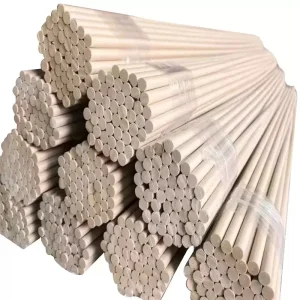
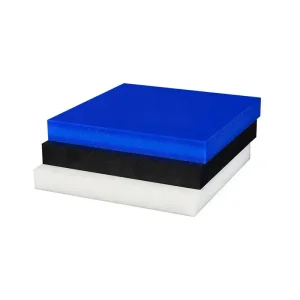
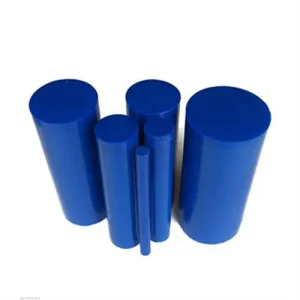
For decades, mechanical drive systems relied almost exclusively on metals. However, the modern industrial landscape demands lighter weights, lower friction coefficients, minimal lubrication, and superior noise reduction. In this context, polymer gears have evolved from simple components used in light-load household appliances into high-performance, critical parts designed for demanding commercial machinery. Today, leading manufacturers rely on engineered polymers to solve the tribological limits of metal gears.
The rise of high-strength engineering plastics—including Polyamide (PA/Nylon), Polyoxymethylene (POM/Delrin), Ultra-High Molecular Weight Polyethylene (UHMWPE), and high-performance Polyetheretherketone (PEEK)—has fundamentally changed power transmission design. These materials offer unique properties that metal alternatives cannot match: natural vibration dampening, chemical inertness, corrosion resistance, and dry-running capabilities. These features are critical for sensitive industries such as medical diagnostics, pharmaceutical production, food processing, and chemical handling.
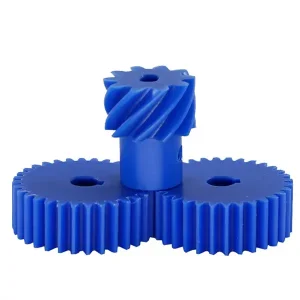
By using precision CNC machining and compression molding, manufacturers can achieve tight clearances and optimize tooth geometry. This improves overall transmission efficiency and extends the service life of gear systems. It also reduces downtime caused by wear and grease contamination in critical industrial environments.
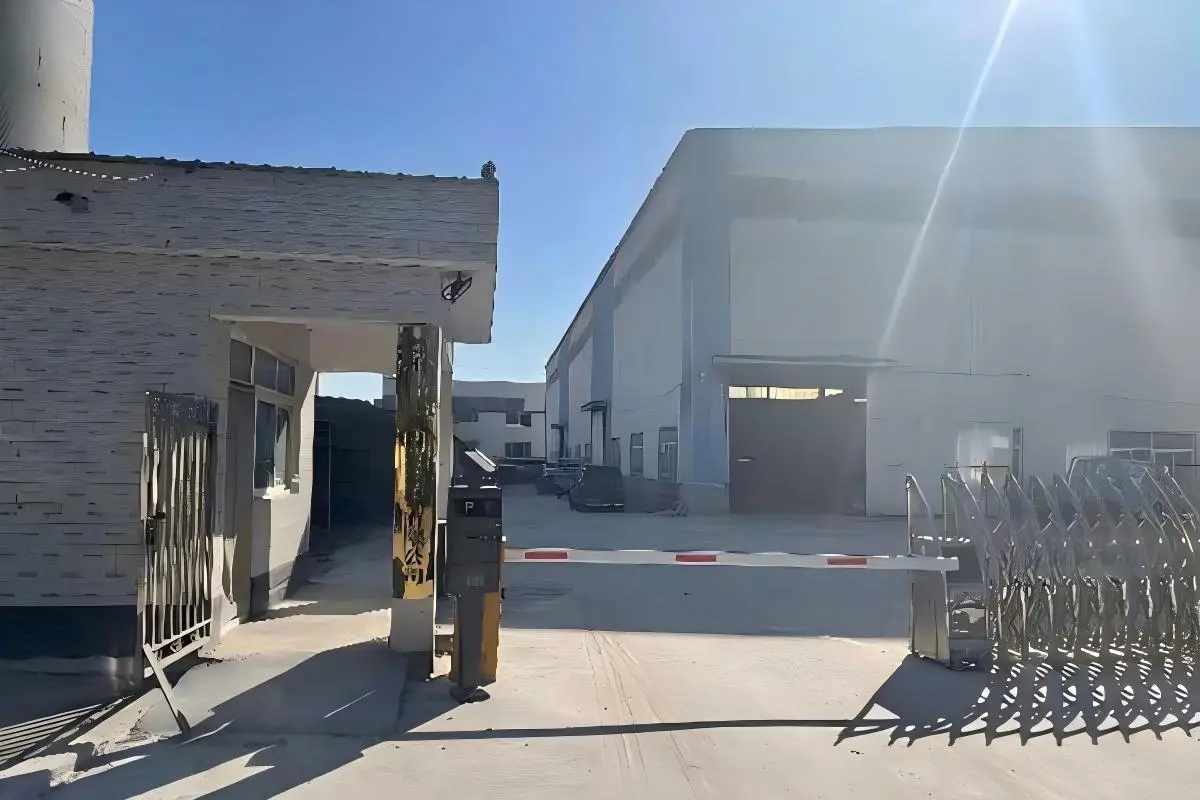
Understanding the properties of these materials is crucial for matching them to specific industrial application requirements:
Known for its exceptional tensile strength, impact absorption, and fatigue resistance. Nylon gears are highly resilient under shock loads but require careful design consideration regarding water absorption and dimensional changes in humid environments.
Features low moisture absorption, high dimensional stability, and a low coefficient of friction. POM gears are ideal for precision gears, instrumentation, and continuous-sliding applications where dimensional accuracy is critical.
PEEK offers extreme chemical resistance and structural integrity up to 250°C. UHMWPE delivers unmatched wear resistance and impact absorption, making it suitable for heavy-duty slide liners, guides, and specialized low-speed gears.
When engineering teams select polymer components over traditional metal gears, they must evaluate several tribological properties. The table below compares the engineering polymers processed by Tianjin Beyond Technology Development Co., Ltd. for gear racks, pinions, and industrial wear elements:
| Polymer Type | Tensile Strength (MPa) | Coeff. of Friction (Dry) | Max Temp (°C) | Water Absorption (%) | Primary Mechanical Benefit |
|---|---|---|---|---|---|
| Nylon (PA6/PA66) | 70 - 85 | 0.35 - 0.42 | 100 | 1.5 - 2.8 | Excellent impact absorption, high fatigue resistance |
| POM (Copolymer/Homopolymer) | 60 - 70 | 0.20 - 0.28 | 110 | 0.20 - 0.25 | Superior dimensional stability, low wear rate |
| UHMWPE (PE1000) | 22 - 35 | 0.12 - 0.20 | 80 | < 0.01 | Extreme wear resistance, low friction, zero water absorption |
| PEEK | 95 - 110 | 0.30 - 0.38 | 250+ | 0.10 | High thermal stability, exceptional chemical resistance |
| HDPE (PE300) | 20 - 30 | 0.25 - 0.30 | 75 | < 0.01 | Cost-effective, highly chemical-resistant, food safe |
Global procurement teams must balance unit costs with performance limits. For example, while PEEK offers outstanding heat tolerance, its material cost restricts its use to critical areas like aerospace actuators or semiconductor processing tools. For general industrial power transmission, precision machined POM and cast Nylon 6 provide a balanced combination of mechanical strength, wear life, and cost efficiency.
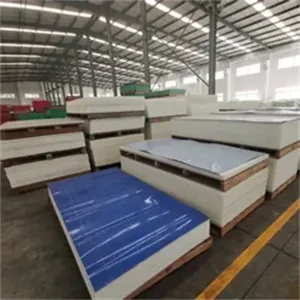
Tianjin Beyond Technology Development Co., Ltd. has established a modern industrial plant that integrates raw material compounding, plate compression molding, rod extrusion, and multi-axis CNC machining. Founded in 2015, the company has built an efficient manufacturing facility in China that helps stabilize global supply chains against supply shortages and cost fluctuations.
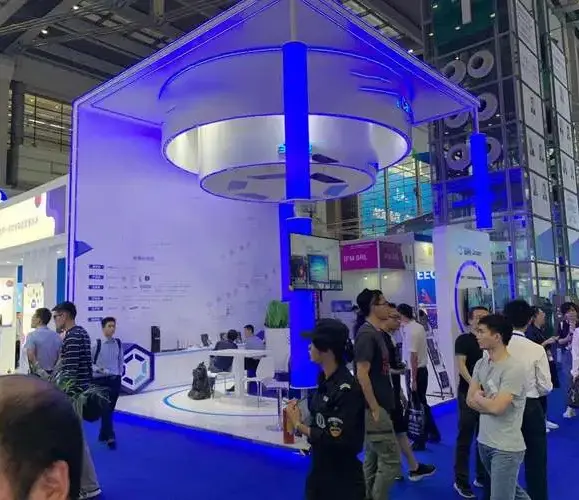
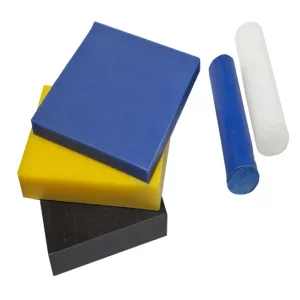
By producing raw sheets and rods in-house before machining, Tianjin Beyond ensures complete material traceability and control over physical properties. This vertical integration allows the team to customize materials—such as adding carbon fibers, glass fibers, oil lubricants, or anti-static additives—to meet specific application demands. Global customers benefit from this single-source manufacturing model through lower shipping costs, faster production turnarounds, and reliable quality control.
Our Quality Control laboratory monitors physical properties, including Shore D hardness, density, tensile strength, and dimensions, from raw polymer resin to the finished machined components. This strict quality control ensures every batch meets ISO9001, SGS, and BV international certification standards.
High-performance polymers are used in diverse industrial environments worldwide. By selecting the correct polymer, design engineers can optimize equipment performance for specialized working conditions:
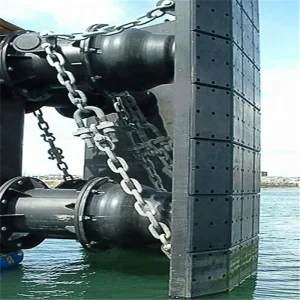
In wet, corrosive marine environments, traditional metal bushings and guides fail quickly due to salt rust. We manufacture PE1000 UHMWPE dock fender pads that protect concrete pilings and vessel hulls. These pads withstand high impact, do not absorb water, and offer self-lubricating sliding properties.
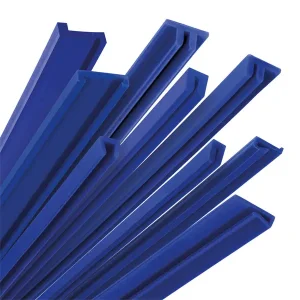
High-speed conveying systems require low-noise components that can operate continuously without grease lubrication. Our extruded profiles and wear strips reduce friction under conveyor chains, lower motor energy use, and minimize dust buildup in distribution centers.
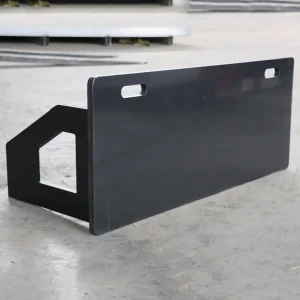
Mobile cranes and heavy lift rigs require solid support surfaces. We supply specialized HDPE and UHMWPE crane outrigger pads that distribute heavy loads over uneven ground, preventing sudden soil shifts and protecting paved surfaces.
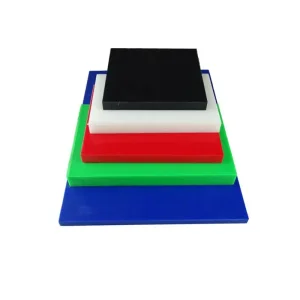
Food processing plants must comply with strict hygiene standards, preventing lubricants from contaminating food products. Our food-grade Blue PE500 cutting boards and machined POM components resist chemical cleaning agents and run reliably without grease.
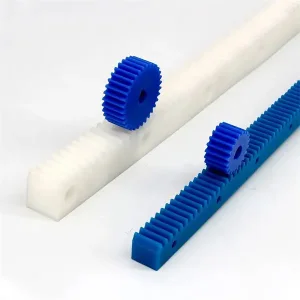
Modern automotive systems use polymer gear racks to reduce weight and operation noise. We machine precision nylon rack and pinion gears that damp vibration, reduce weight, and ensure smooth power steering and actuator movement.
Chemical processing lines require components that resist strong acids and alkalis. We provide anti-static POM sheets and PVC plates that prevent electrostatic discharges and resist chemical corrosion, protecting sensitive cleanrooms and processing equipment.
Expert insights on material selection, machining limits, and gear performance considerations.
Polymers have a higher coefficient of linear thermal expansion (CLTE) than metals (often 5 to 10 times higher). To prevent binding, design engineers must increase backlash allowances and design tooth profiles with appropriate clearances. POM and PEEK are preferred for applications with fluctuating temperatures due to their superior dimensional stability.
Yes. Materials like PA6, POM, and UHMWPE have natural self-lubricating properties. They can operate without oil or grease, making them ideal for cleanrooms, food processing, and textile manufacturing where contamination must be avoided. However, under high loads or high sliding speeds, small amounts of compatible lubricants can help dissipate heat and extend gear life.
Using our advanced gantry CNC milling and lathe centers, we can hold dimensional tolerances down to ±0.05 mm for standard engineering plastics. For highly stable materials like POM-C, we can achieve tolerances of ±0.02 mm, depending on the part geometry and ambient temperature during machining.
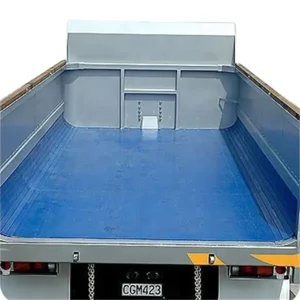
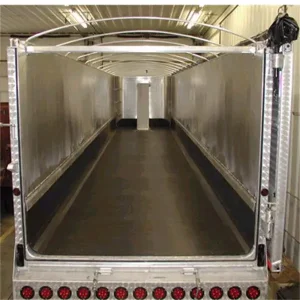
UHMWPE features extreme impact strength and a very low coefficient of friction. Unlike steel, it does not rust, absorbs impact energy to protect the underlying structure, and resists material buildup (like wet coal, clay, or bulk materials). This makes it highly effective for truck bed liners, coal bunkers, and chute linings.
We perform strict raw material testing on incoming polymer resins from trusted suppliers like Celanese (Ticona), LG, and Sinopec. By producing our own sheets and rods in-house before machining, we closely monitor density, molecular weight, and structural uniformity, ensuring consistent physical properties throughout the entire production run.
Explore our wide range of custom machined components, industrial liners, and heavy-duty wear materials.
 Beyond