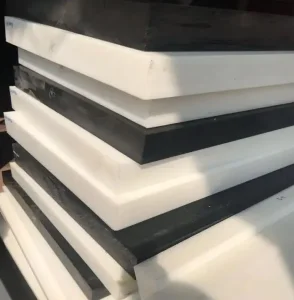
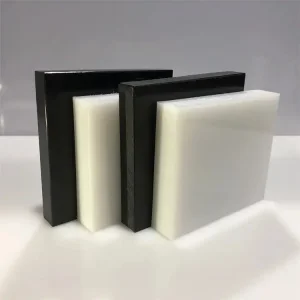
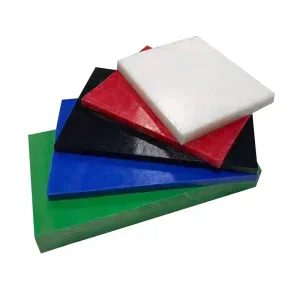
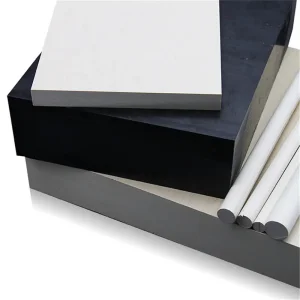
Engineered to withstand challenging thermal environments and aggressive chemical exposure.
The Russian Federation’s industrial manufacturing sector is undergoing a massive wave of technological upgrades. Across major hubs such as the Urals, Siberia, and Nizhny Novgorod, heavy manufacturing plants, electroplating lines, municipal wastewater systems, and chemical processing complexes are replacing legacy metallic infrastructures with advanced thermoplastics.
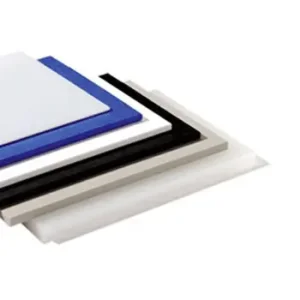
This transition is driven by a critical industrial demand: raw resistance to highly corrosive media combined with physical resilience at sub-zero operating environments. Polypropylene (PP Series) has emerged as the premier material for these challenging conditions. PPH (Polypropylene Homopolymer) provides outstanding structural rigidity and temperature limits for processing chambers, while PPC (Polypropylene Copolymer) ensures high impact resistance down to -40°C.
As local supply chains tighten and modernization becomes a key priority, the sourcing of premium, high-molecular-weight raw material sheets with strict thickness tolerances is vital. This is where certified global manufacturing partnerships become the bedrock of Russian engineering success.
How engineering firms navigate material selection, logistics, and quality assurance.
Global standards require varying formulations. Whether it's adding UV stabilizers for open-air installations in southern territories, or utilizing Flame Retardant additives (UL94 V-0 class) for closed ventilation shafts, off-the-shelf sheets often fall short of custom engineering compliance.
Precision CNC machining of PP components requires ultra-low internal stress sheets. Inadequately annealed sheets warp dramatically during machining, causing misalignment in finished products. Modern sourcing relies on raw material partnerships with giants like LG, TICONA, and Sinopec.
Cross-border procurement demands stable lead times and reliable transportation routes. Leveraging the New Silk Road (China-Europe Railway Express) allows direct freight transport to Moscow, St. Petersburg, and Central Russia, minimizing logistical bottlenecks compared to traditional sea shipping.
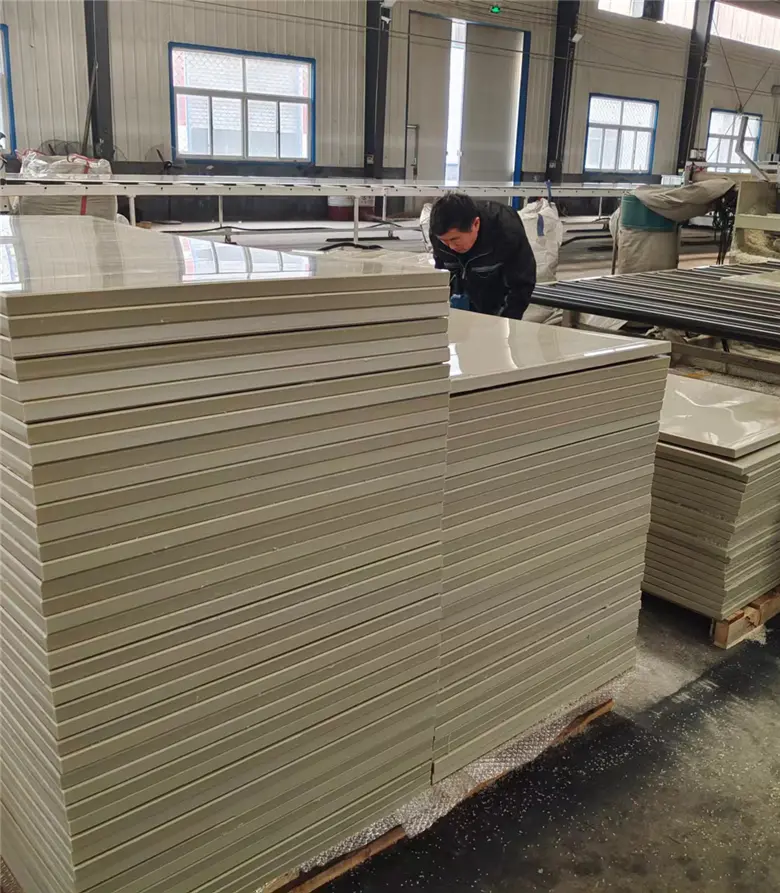
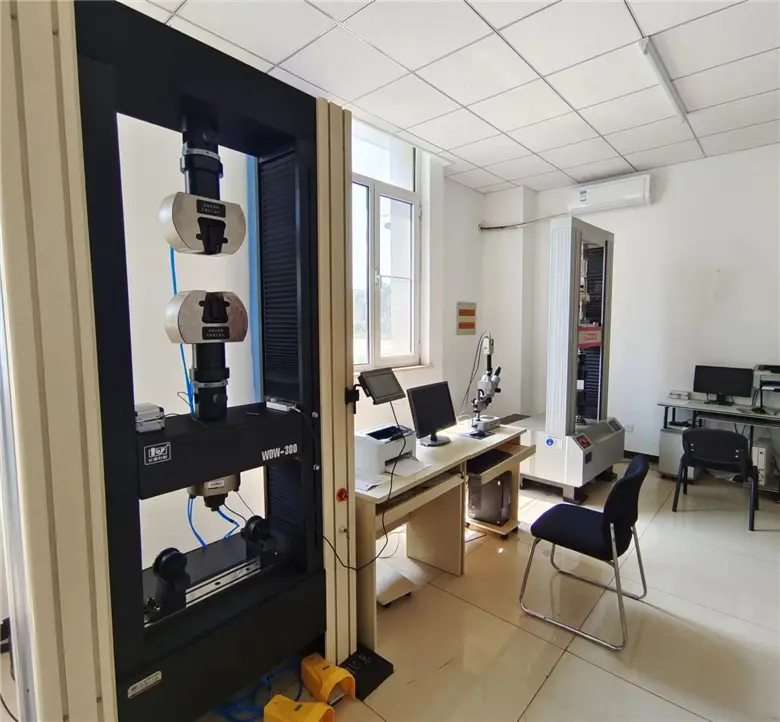
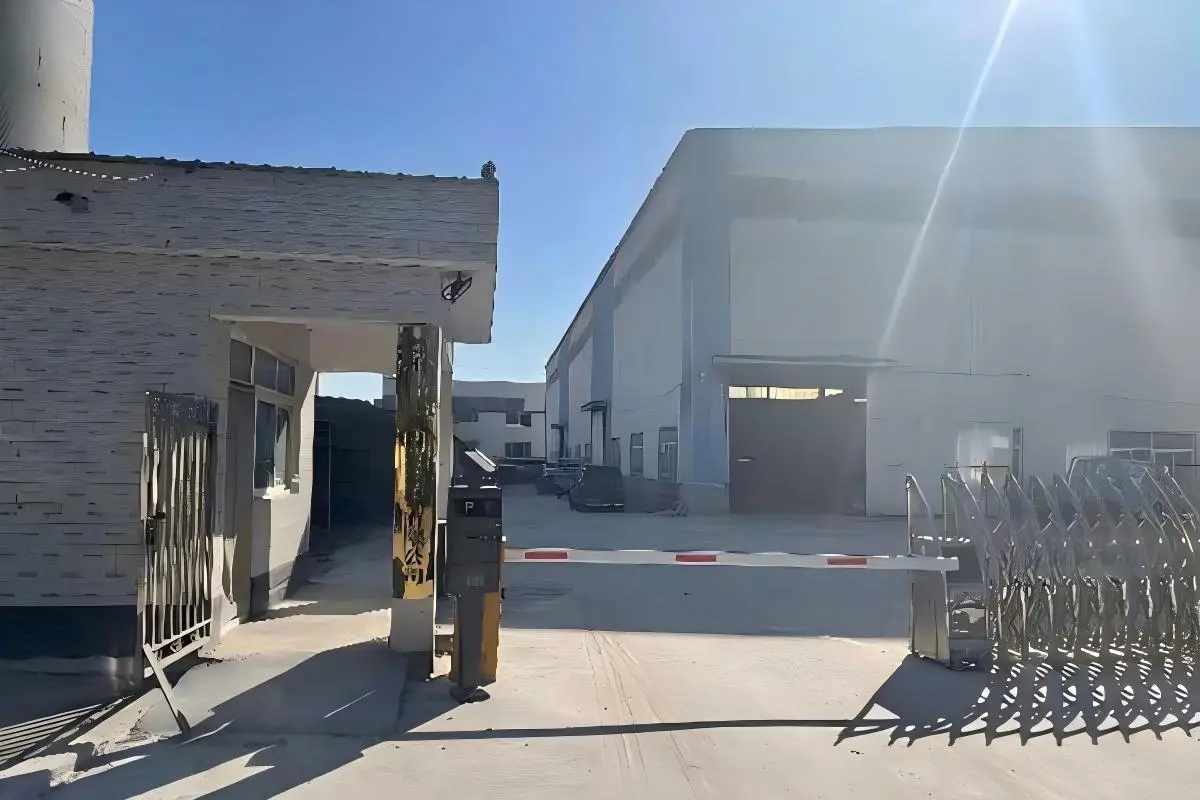
Tianjin Beyond Technology Development Co., Ltd. (BEYOND) stands as a prominent manufacturing enterprise specializing in engineering plastic materials and precision CNC machining. Established with a sprawling 50,000 square meter production base, BEYOND has integrated compression molding and extrusion workshops, a state-of-the-art precision CNC machining center, and a dedicated R&D facility.
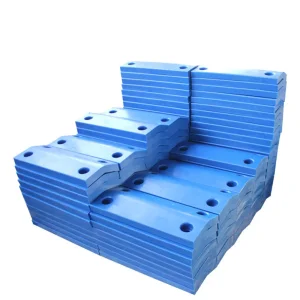
Our production capabilities are outfitted with advanced international machinery—including large-scale extrusion lines, gantry CNC lathes, gantry CNC milling systems, and large-scale engraving machines. This high level of automation (Factory 4.0) guarantees consistent tolerances, minimizes mechanical stress in the material, and allows us to provide massive production volumes or customized non-standard geometries with unparalleled efficiency.
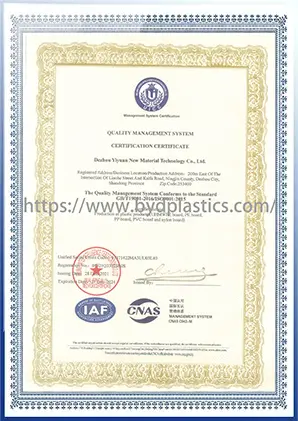
We operate in strict adherence to the ISO9001 quality system, ensuring every batch from raw material incoming inspection to final CNC processing is backed by an independent COA (Certificate of Analysis).
Learn More About Our CapabilitiesReal-world performance of PP Series across key Russian industrial sectors.
Widely deployed in the industrial regions of Chelyabinsk and Yekaterinburg. High chemical resistance makes PP sheets ideal for holding acids, alkalis, and aggressive organic solvents at temperatures up to 100°C without risk of structural cracking or contamination.
Applied in municipal and industrial purification systems across major cities like Moscow and Novosibirsk. The PP sheets act as non-absorbent linings, settler plates, and process piping systems that resist microbial corrosion and biofilm accumulation.
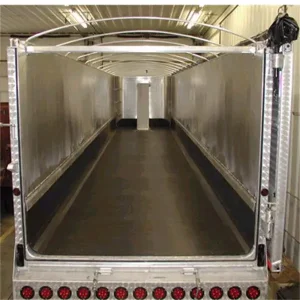
Used for ventilation ductwork in northern mining facilities (such as Norilsk). Flame retardant PPH and modified PPC sheets prevent duct cracking under extreme ambient temperatures and withstand corrosive gas scrubbing cycles.
A professional comparative guide to selecting the right polymer for extreme conditions.
| Property | PPH (Polypropylene Homopolymer) | PPC (Polypropylene Copolymer) | HDPE (High-Density Polyethylene) | UHMW-PE (PE1000) |
|---|---|---|---|---|
| Density (g/cm³) | 0.90 - 0.92 | 0.89 - 0.91 | 0.94 - 0.96 | 0.93 - 0.94 |
| Operating Temp. Range | 0°C to +100°C | -40°C to +80°C | -50°C to +80°C | -150°C to +80°C |
| Impact Strength (kJ/m²) | Moderate (brittle near 0°C) | High (outstanding cold impact) | High | Extremely High (Self-lubricating) |
| Tensile Strength | Highest (~32 MPa) | Moderate (~28 MPa) | Moderate (~22 MPa) | Low-Moderate (~20 MPa) |
| Chemical Resistance | Excellent (Acids, Alkalis) | Excellent | Good | Superior (Wear resistant) |
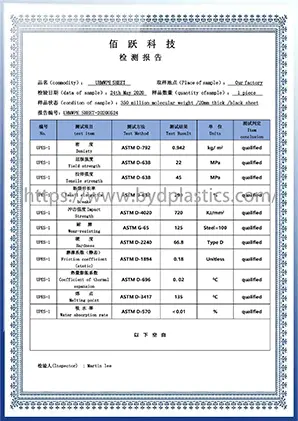
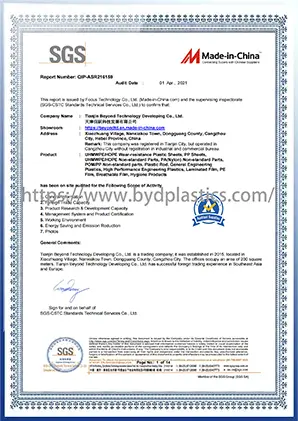
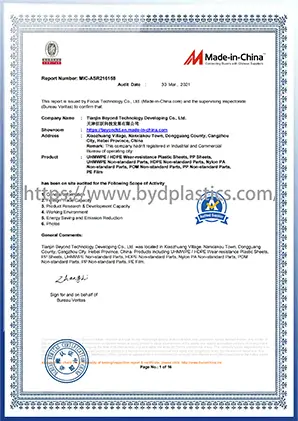
At BEYOND, we realize that for Russian engineering applications, certificates of raw materials and performance analysis are mandatory for technical audit approval. We maintain active partnerships with world-renowned material suppliers and testing bodies. Our processes are verified under ISO9001, SGS, and BV protocols.
We collaborate closely with domestic and global plastic institutions to research cold-temperature modification of polymers, helping us optimize the crystallization structure of PP to ensure high weldability and anti-warping characteristics.
Answering the most critical technical questions for engineers and purchasing managers in Russia.
Supporting Russian infrastructure with UHMW-PE, HDPE, and custom machining components.
 Beyond