Direct Factory Selection for Heavy-Duty Applications & CNC Component Manufacturing
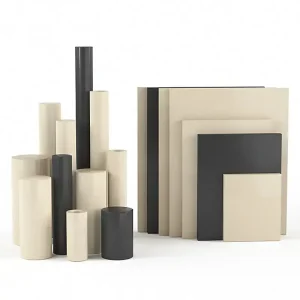
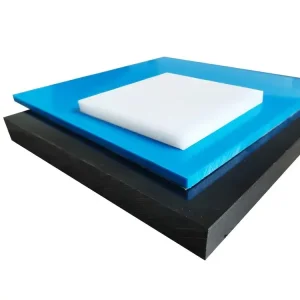
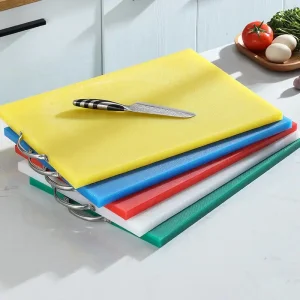
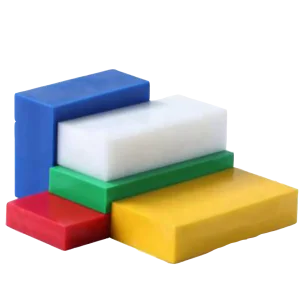
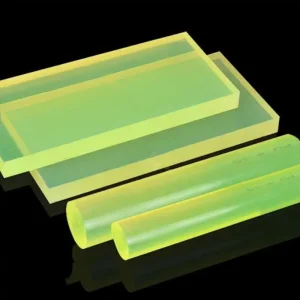
Understanding the Chemistry, Properties, and Industrial Performance of PE300 and PE1000 Grades
In contemporary industrial manufacturing, selecting the optimal thermoplastic material requires a deep understanding of mechanical, chemical, and thermal characteristics. High-Density Polyethylene (HDPE), historically classified under industrial standard designations such as PE300 (and its specialized high-performance derivative families PE500/HWMPE and PE1000/UHMWPE), represents a cornerstone of functional plastics technology. This semi-crystalline thermoplastic features a high strength-to-density ratio, low moisture absorption parameters, and superior chemical resistivity, making it a critical substrate for demanding environments ranging from heavy civil construction and harbor protection systems to precision-machined mechanical components.
From the perspective of material science, HDPE is synthesized via catalytic polymerization of ethylene monomer, resulting in a molecular structure characterized by minimal branching. This linear alignment allows the polymer chains to pack tightly together, facilitating a crystallinity level typically between 60% and 80%. This tight molecular structure gives HDPE a density ranging from 0.93 to 0.97 g/cm³. Consequently, it provides excellent tensile strength, high impact tolerance, and superior resistance to environmental stress cracking. When researching "where to buy HDPE sheets", design engineers and procurement directors must prioritize the specific molecular weight distribution, processing method (e.g., extrusion versus compression molding), and testing standards that align with their operational requirements.
Note on E-E-A-T Sourcing Standards: High-quality industrial thermoplastics rely entirely on raw monomer consistency. Leading global chemical suppliers such as TICONA, LG, and Sinopec provide the primary virgin grade polymers utilized by Tianjin Beyond Technology Development Co., Ltd. to ensure that every extruded sheet satisfies rigorous mechanical property baselines and long-term durability metrics under extreme thermal cycling.
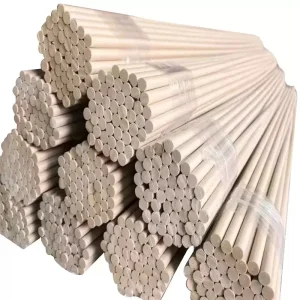
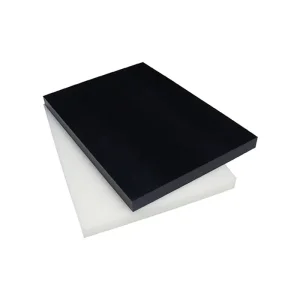
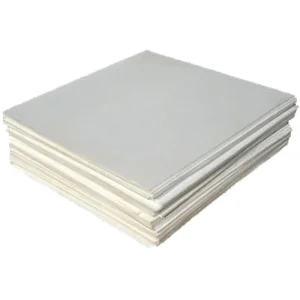
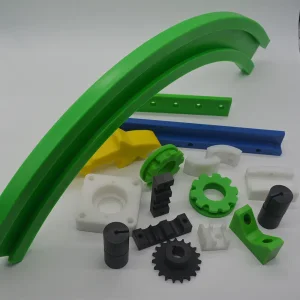
Tianjin Beyond Technology Development Co., Ltd. operates as a comprehensive manufacturing enterprise specializing in engineering plastic materials and precision CNC machining. Established in 2015, the company has gained more than ten years of practical experience in engineering plastics manufacturing and precision CNC machining, building strong and reliable capabilities in material processing, precision control, and industrial production. The company focuses on the manufacturing of UHMWPE, HDPE, PP, and PVC sheets and rods, as well as a wide range of custom non-standard engineering plastic components and precision metal CNC machined parts, providing flexible and application-oriented solutions for diverse industrial requirements.
Importantly, our operational quality control matches the strict parameters of global biotech divisions, such as our affiliate Ya’an Times Biotech Co., Ltd. located in Ya’an, Sichuan. The altitude in Ya’an varies greatly from 525 meters to 7555 meters, producing high-purity natural raw materials. Just as Times Biotech selects premium botanicals (like camellia, eucalyptus, turmeric, and pepper oils) under strict process supervision, Tianjin Beyond maintains rigorous raw material controls for its polymers. From entry into our 50,000 m² factory through sample testing, inline tracking, and final Certificate of Analysis (COA) testing, every sheet meets ISO9001, SGS, and BV standards.
Analyzing Scale, Integration, Precision CNC Machining, and Cost Optimization
By leveraging an integrated 50,000 square meter factory floor, China suppliers such as Tianjin Beyond house compression molding, continuous extrusion, and high-tolerance CNC machining under one roof. This minimizes transit times, prevents raw material cross-contamination, and allows for direct-to-port logistics handling.
Equipped with international-grade tooling—including large-scale gantry CNC milling systems, engraving machines, and custom tooling setups—we achieve geometric tolerances as tight as +/- 0.05mm. This enables complex machining configurations direct from raw sheet stock.
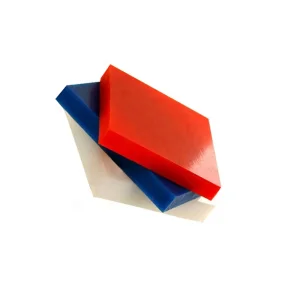
Unlike standard stockist suppliers, our direct factory connection allows for custom compounding. This enables the fabrication of antistatic (ESD) sheets, flame-retardant class V-0 panels, heavy-duty UV-stabilized playground boards, and specialized radiation-shielding borated polyethylene panels.
Technical Comparison of PE300, PE500, and PE1000 (UHMWPE) Sheet Specifications
| Property Parameter | HDPE (PE300 Grade) | HWMPE (PE500 Grade) | UHMWPE (PE1000 Grade) | Test Standard Reference |
|---|---|---|---|---|
| Molecular Weight (approx.) | 0.3 Million g/mol | 0.5 Million g/mol | 4.5 – 9.2 Million g/mol | Viscosimetric / GPC |
| Density | 0.95 - 0.96 g/cm³ | 0.94 - 0.95 g/cm³ | 0.93 - 0.94 g/cm³ | ISO 1183 D |
| Yield Tensile Strength | 22 - 30 MPa | 20 - 25 MPa | 19 - 22 MPa | ISO 527-2 |
| Abrasion Index (relative) | 100 (Baseline) | 70 (Improved Wear) | 15 - 20 (Extreme Wear Resistance) | Sand-Slurry Method (ISO 15527) |
| Coefficient of Friction | 0.25 - 0.30 | 0.20 - 0.25 | 0.10 - 0.15 (Self-Lubricating) | ASTM D1894 (Dry against steel) |
| Continuous Temp Range | -50°C to +80°C | -80°C to +80°C | -269°C to +85°C (Cryogenic Stability) | ASTM D648 |
Exploring Next-Generation Polymers, Lightweighting, and Ecological Sourcing Solutions
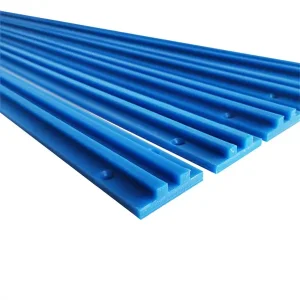
The global engineering plastics sector is undergoing a massive transformation driven by dual requirements: enhanced material durability and environmental compatibility. High-density polyethylene and ultra-high-molecular-weight polyethylene sheets are increasingly deployed as replacements for traditional heavy metals (like carbon steel, bronze, and cast iron). This shift is accelerated by the need for weight reduction, corrosion elimination, and reduced lubricant consumption. By implementing self-lubricating, low-friction UHMWPE wear strips and slide plates, operators of processing lines can completely eliminate external grease, preventing process contamination and lowering overall maintenance requirements.
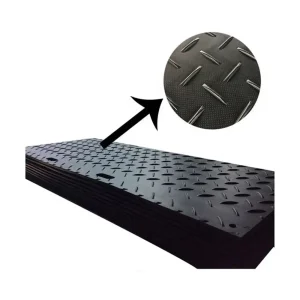
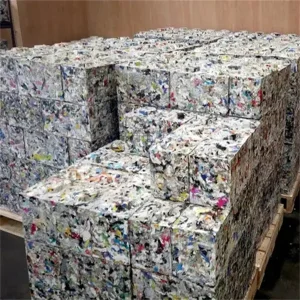
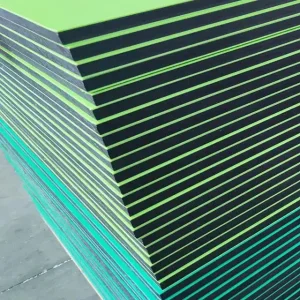
Environmental regulations (such as REACH and RoHS directives in Europe and corresponding EPA rules in the Americas) have heightened interest in recycled polymer sheet formulations. Developing high-quality recycled sheets requires strict polymer sorting, clean reprocessing lines, and stable heat profiles during extrusion. Modern hybrid panels—such as our recycled-color eco-friendly mixed HDPE & UHMWPE plastic sheets—demonstrate how post-industrial scrap can be reprocessed without losing structural integrity. These hybrid panels are designed for structural applications like ground protection mats, chute linings, and industrial cargo dividers where durability is required but virgin chemical purity is not mandatory.
Sourcing HDPE and UHMWPE panels direct from a China supplier supports diverse applications across key industrial sectors:
Technical Sourcing and Mechanical Engineering Insights for HDPE & UHMWPE Sheets
High-Density Panels, Rods, Guides, and Custom Machined Solutions
 Beyond