Direct factory supply of semi-finished rods, sheets, and high-performance components optimized for extreme temperature, high mechanical load, and chemical resilience applications across German industrial hubs.
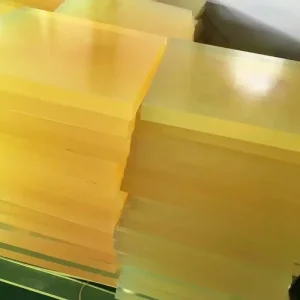
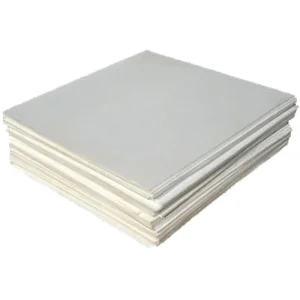

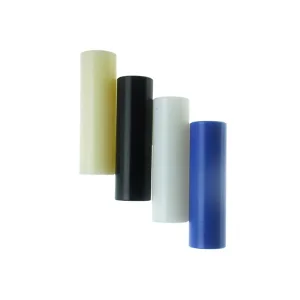
Germany has long stood as the engineering engine of Europe, spearheaded by its advanced automotive sectors, precision machine tool manufacturing (Werkzeugmaschinenbau), medical technology hubs (Medizintechnik) in Baden-Württemberg, and high-altitude aerospace complexes. As these sectors navigate the transition toward Industry 4.0 and strive for climate neutrality, the demand for metal replacement materials has surged. Polyetheretherketone (PEEK) has emerged as a cornerstone polymer in this structural shift due to its unmatched weight-to-strength ratio, continuous service temperatures of up to 260°C, and outstanding chemical immunity.
In German automotive manufacturing, the transition from internal combustion engines to electric powertrains demands materials that can withstand high voltage, thermal cycling, and aggressive chemical lubricants. Polyetheretherketone and ultra-high-molecular-weight polyethylene (UHMWPE) components are increasingly replacing heavy copper, steel, and bronze alloys in stator insulation, gear assemblies, and battery management components. By reducing component mass, German manufacturers directly optimize electric vehicle (EV) ranges and meet strict European Union fleet emission compliance targets.
German manufacturing relies on precise tolerances and long-term material stability. High-performance polymers satisfy three key strategic drivers:
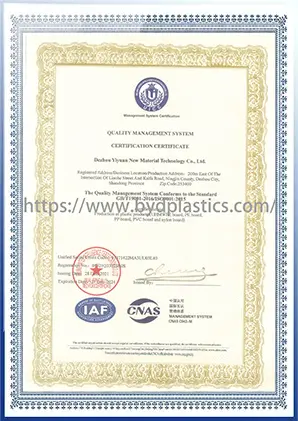
Procurement processes in German industrial firms are dictated by DIN standards, ISO certifications, and detailed material traceability. Sourcing semi-finished plastic shapes (stock rods, sheets, tubes) or fully custom CNC machined components from international manufacturers demands a supplier with robust, verified production capability. Engineering teams cannot compromise on material structural integrity; internal voids, structural micro-cracks, or fluctuating molecular weights can lead to catastophic failures in high-pressure oil and gas systems, medical implants, or food processing lines.
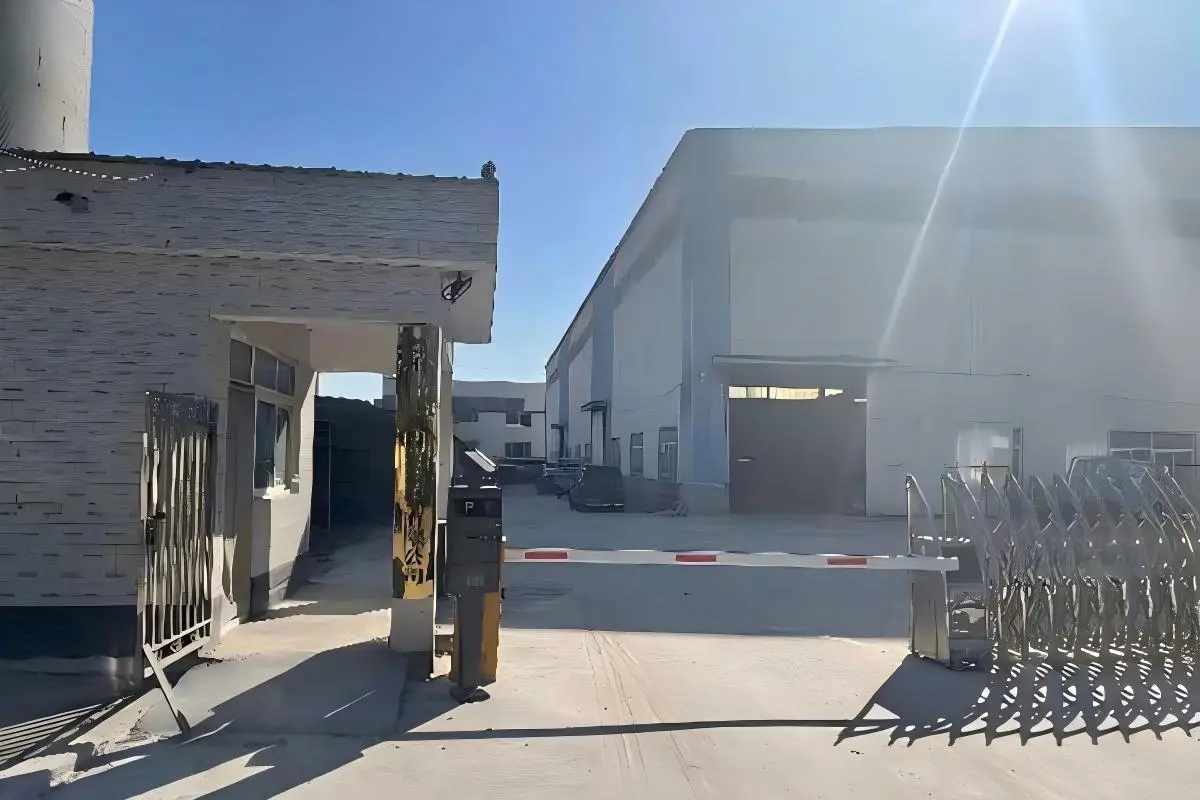
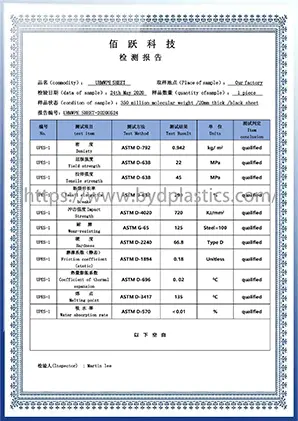
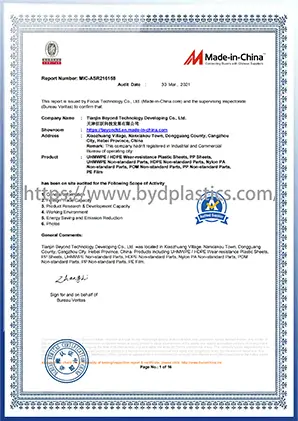
To meet these expectations, Tianjin Beyond Technology Development Co., Ltd. has established a robust quality control architecture across our 50,000-square-meter facility. By partnering with leading raw material suppliers like TICONA, LG, and Sinopec, we guarantee that all raw pellets and resins are trackable to their chemical batches, preventing contamination or degraded performance. Our extrusion and compression molding lines are monitored in real time, ensuring consistent mechanical properties across every production run.
| Property Designation | PEEK (Polyetheretherketone) | PTFE (Polytetrafluoroethylene) | UHMW-PE (PE1000) | POM (Polyacetal Acetal) |
|---|---|---|---|---|
| Density (g/cm³) | 1.32 - 1.40 | 2.14 - 2.20 | 0.93 - 0.95 | 1.41 - 1.43 |
| Tensile Strength (MPa) | 95 - 110 | 20 - 35 | 22 - 27 | 65 - 70 |
| Max Service Temp (°C) | 250 - 260 | 260 | 80 | 100 - 110 |
| Coefficient of Friction | 0.30 - 0.40 | 0.05 - 0.10 | 0.10 - 0.15 | 0.25 - 0.35 |
| Water Absorption (%) | < 0.1% | < 0.01% | < 0.01% | < 0.25% |
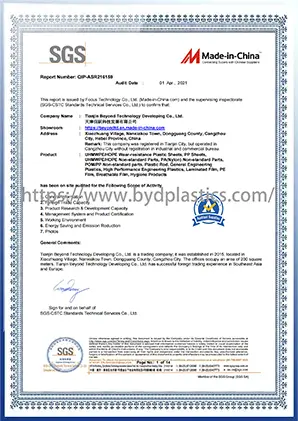
Since 2015, Tianjin Beyond Technology Development Co., Ltd. has integrated extrusion, compression molding, and precision CNC machining under a single operational umbrella. This allows us to supply high-precision, large-volume engineering plastic components and metal-plastic assemblies directly to German and European supply chains.
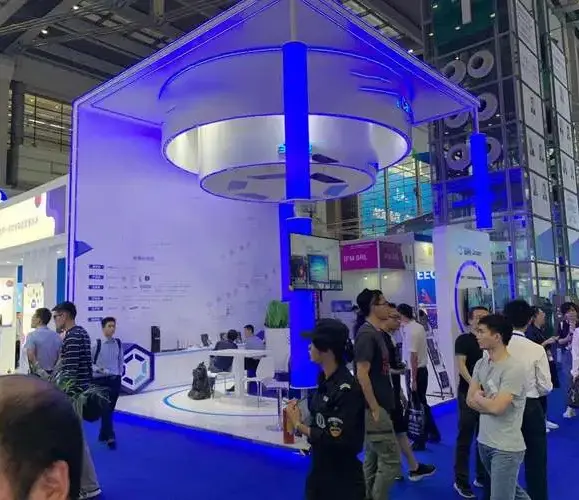
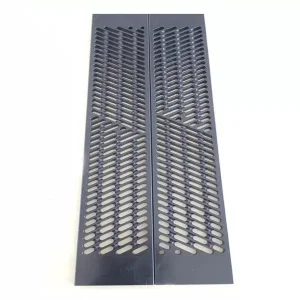
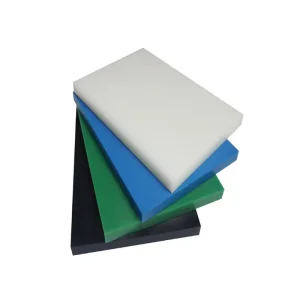
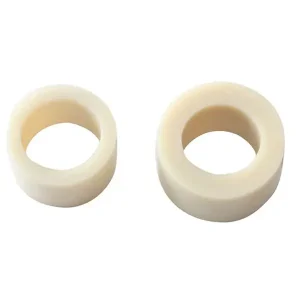
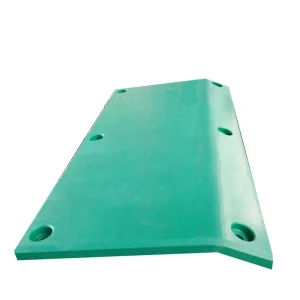
Our state-of-the-art facility features large-scale gantry CNC lathes, high-speed multi-axis CNC milling systems, and precision engraving tools. This allows us to manufacture complex geometries, including thin-walled bushings, custom gears, complex valve manifolds, and wear strips. Our team works with a wide range of materials, including PEEK, UHMWPE, HDPE, POM, Nylon, PP, and PVC, ensuring we can deliver solutions tailored to your specific mechanical requirements.
By handling both raw stock production and finish machining, we reduce intermediate shipping costs and maintain consistent quality control across all stages of production.
Operating within Germany and the broader European Union means adhering to stringent chemical and environmental regulations. Imported high-performance plastics must be fully certified to ensure smooth custom clearance and avoid project delays.
Every shipment of our PEEK, PTFE, and UHMWPE compounds is fully analyzed and documented to verify it is free of restricted Substances of Very High Concern (SVHC), complying with European chemicals regulations.
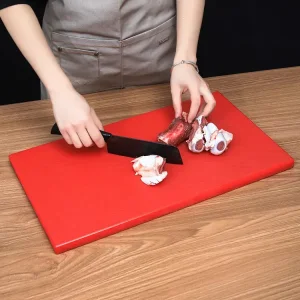
For food-processing machinery used in German commercial kitchens or processing plants, our virgin plastics comply with EU Regulation 10/2011, FDA guidelines, and German BfR recommendations.
We supply standard-compliant semi-finished profiles conforming to European dimensional tolerances (DIN EN 15860), complete with chemical analysis certificates and raw material batch tracking.
Recognizing that timing is critical in modern manufacturing, Tianjin Beyond provides reliable logistics configurations directly to major German transport corridors. Whether your project requires container shipping to key northern seaports like Hamburg or Bremen, or rapid air-freight shipping to Frankfurt International Airport, we manage custom declarations, export licensing, and packaging design to ensure your material arrives intact.
Each batch is packaged in protective vapor-barrier wraps, securing structural sheets and precision-machined gears against moisture, temperature fluctuations, and transport wear during shipping.
The design requirements for high-performance plastics are continuously evolving. Key industry developments focus on improving operating limits and environmental sustainability:
Standard virgin PEEK has high mechanical strength, but severe friction applications require modified formulations. Adding carbon fiber (typically 30%) increases the flexural modulus and load-bearing capacity at elevated temperatures. Adding PTFE, graphite, and carbon fiber (PEEK-PVX) lowers the friction coefficient, making it suitable for high-speed bushings and dry-running pump impellers in chemical processing.
For short-run prototyping and low-volume aerospace components, Fused Filament Fabrication (FFF) of PEEK has become a viable alternative to CNC milling. However, printing PEEK requires heated print chambers (exceeding 150°C) and high-temperature print heads (400°C+) to achieve proper layer adhesion.
Under European green initiatives, manufacturers are actively seeking high-quality recycled alternatives. Beyond offers recycled UHMWPE and HDPE sheets, blending sustainability with reliable physical properties. Our processes ensure these materials retain their chemical and wear resistance, helping manufacturers meet recycled-content requirements.
Get direct answers to common technical, manufacturing, and shipping questions regarding PEEK and other high-performance polymers.
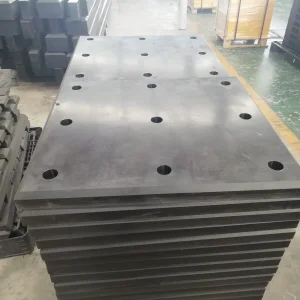
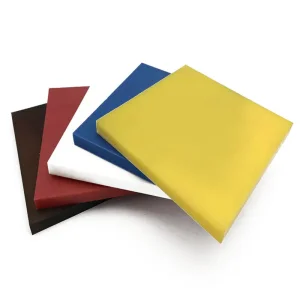
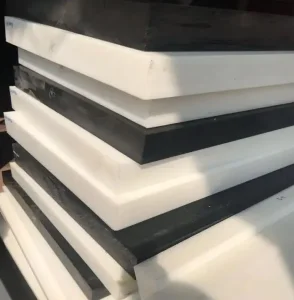
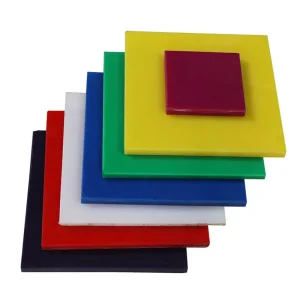
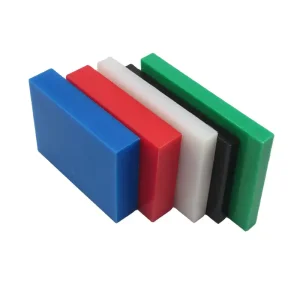
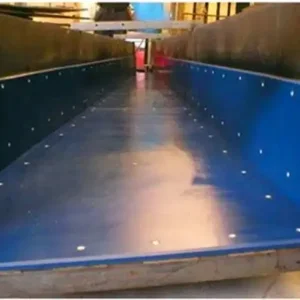
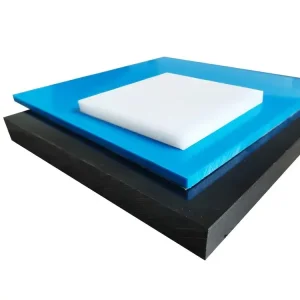
Browse our full selection of industrial polymer sheets, rods, and machined components serving German machine manufacturing, logistics, and marine ports.
 Beyond