1. Whitepaper: The Industrial Superiority of UHMW Polyethylene Rods
In modern engineering, selecting materials capable of surviving high-wear, high-impact, and chemically aggressive environments is paramount. Among advanced engineering thermoplastics, Ultra-High-Molecular-Weight Polyethylene (UHMW-PE) stands out due to its unique combination of mechanical properties. Defined by a molecular weight that typically ranges between 3.0 million and 9.2 million grams per mole (g/mol), UHMWPE possesses a degree of polymer chain entanglement that yields exceptional impact strength, a low coefficient of friction, and unmatched self-lubricating characteristics.
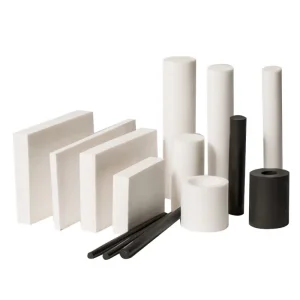
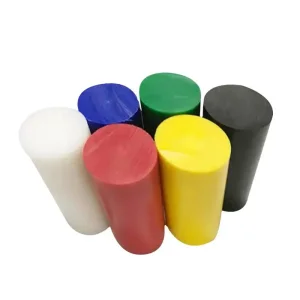
As a leading wholesale UHMW Polyethylene rod supplier and manufacturer, Tianjin Beyond Technology Development Co., Ltd. specializes in delivering material solutions designed to overcome mechanical degradation. UHMWPE rods represent a dependable alternative to metals like stainless steel, bronze, and aluminum in applications where weight reduction, sound dampening, corrosion resistance, and dry-running capabilities are required.
Technical Parameter
UHMWPE (PE1000)
HDPE (PE300)
Nylon PA6
POM (Acetal)
Molecular Weight (g/mol)
3.0M – 9.2M
~300,000
N/A (Polyamide)
N/A (Polyoxymethylene)
Density (g/cm³)
0.93 – 0.95
0.95 – 0.96
1.13 – 1.15
1.41 – 1.43
Dynamic Friction Coeff. (dry)
0.10 – 0.20
0.20 – 0.25
0.30 – 0.40
0.25 – 0.35
Abrasion Index (Sand Slurry Test)
100 (Standard)
~250
~130
~110
Water Absorption (%)
< 0.01%
< 0.01%
~1.5% (High)
~0.2%
Working Temp. Range (°C)
-250 to +80
-50 to +80
-40 to +110
-50 to +100
The table above demonstrates that while other polymers like Nylon and POM exhibit high tensile strength, they suffer from higher density, friction, and moisture absorption. For dry-running sliding applications, cryogenics, and abrasive transport systems, UHMWPE rods remain the optimal material.
2. Global Procurement Challenges in the Plastic Engineering Supply Chain
B2B procurement departments face a range of challenges when securing engineering plastics. For operations such as marine port development, chemical manufacturing, heavy mining, and automated packaging lines, sourcing materials that consistently meet engineering tolerances is critical.
Dimensional Stability & Warping
Many extruded rods experience severe internal stress during the cooling phase. When machined on CNC centers, this stress releases, causing bending and warping. Beyond resolves this through a controlled annealing process that relieves stress before shipment.
Material Dilution & Purity
Some low-cost suppliers dilute virgin UHMWPE resin with recycled low-density PE, reducing wear life by up to 60%. We partner directly with primary material companies (Ticona, LG, Sinopec) to guarantee 100% purity and trace raw material batches.
Machining Intricacy
Because UHMWPE is highly ductile and has a low melting point relative to metals, standard tooling can cause gumming and burrs. We use specialized sharp-edge tooling and high-rpm setups to achieve tight tolerances.
UHMW Polyethylene rods are deployed across several key sectors:
Bulk Material Handling: Used to manufacture wear strips, guide rails, chain guides, and rollers. The material's low friction coefficient prevents material hang-ups and reduces power consumption in conveyor motors.
Port and Marine Infrastructure: Selected for dock fender face pads, wear slabs, and marine structural components. It withstands continuous impact from vessels and resists saltwater corrosion and marine organisms.
Mining and Excavation: Utilized in scraper blades, chute liners, and bushings where high-velocity aggregate slide wears away steel.
Food, Beverage, and Packaging: Complies with FDA regulations for direct food contact. It operates cleanly without requiring lubricants, eliminating contamination risks.
Operational Notice: Material Selection Guidelines
When selecting rod diameters, consider the thermal expansion rate. Plastics expand and contract more than metals. For high-temperature swings (above 60°C), design sliding clearance zones to prevent binding.
4. Corporate Capabilities & Infrastructure
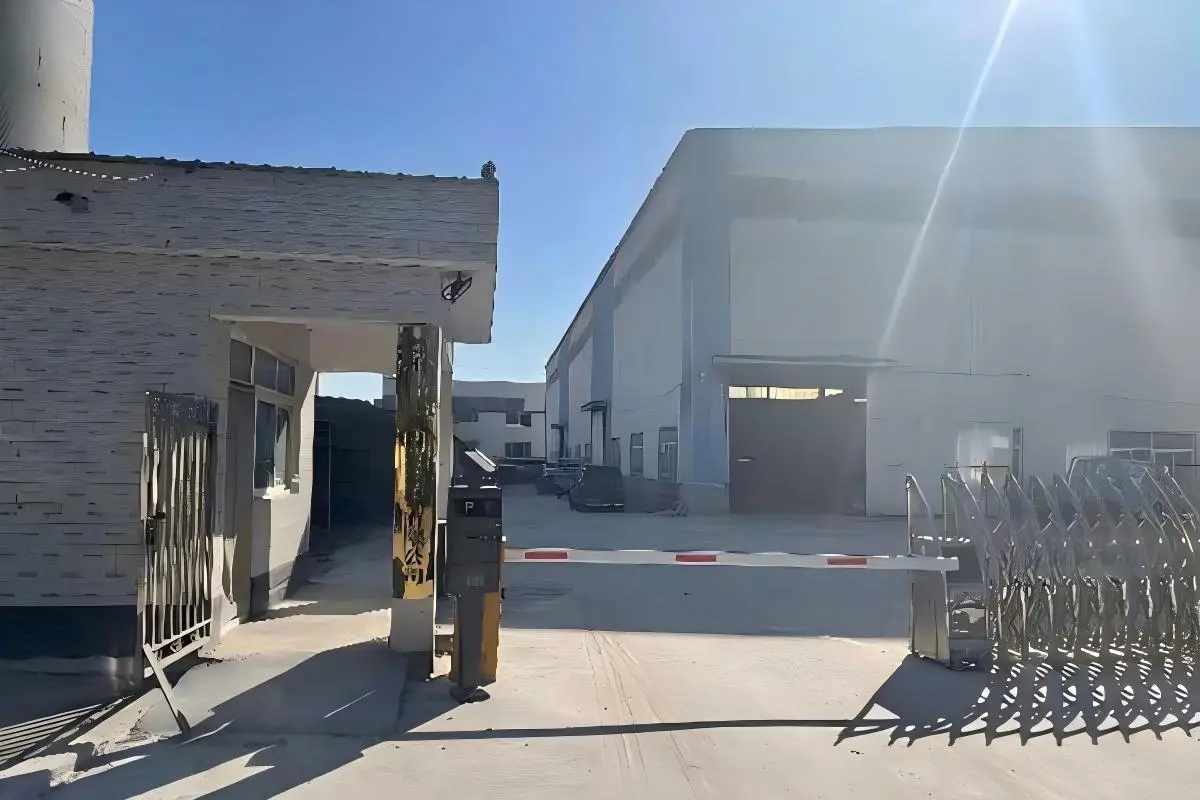
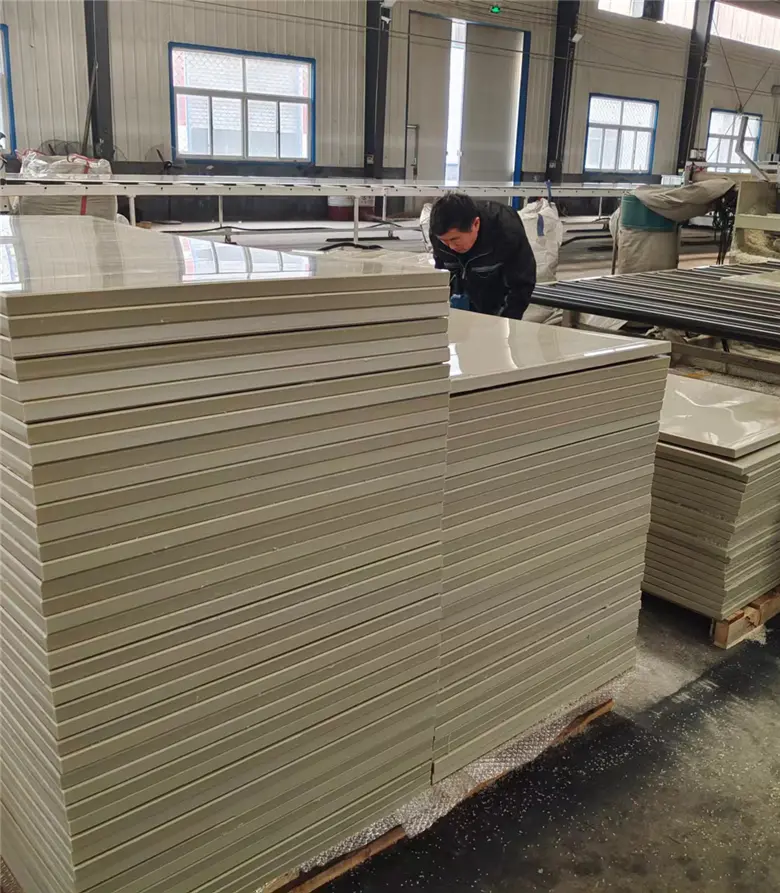
Since 2015, Tianjin Beyond Technology Development Co., Ltd. has grown to operate a manufacturing base of approximately 50,000 square meters. Our facility integrates compression molding, extrusion workshops, precision CNC machining centers, and a dedicated R&D facility.
Outfitted with advanced international equipment—including large-scale compression molding presses, RAM extrusion lines, gantry CNC lathes, 5-axis milling systems, and high-performance engraving machines—our setup supports consistent batch runs and complex, customized component fabrication.
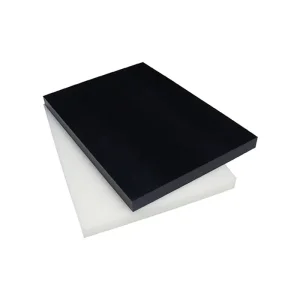
We produce modified UHMWPE sheets and rods containing carbon black or flame-retardant additives. These grades are designed for explosion-proof environments, chemical plants, and underground mining operations.
Nuclear Shielding PE
Formulated with up to 5% boron content, our borated polyethylene blocks and rods are utilized in oncology treatment rooms, nuclear energy plants, and defense systems to absorb neutron radiation.
Precision CNC Machining
Beyond provides customized CNC routing, turning, and planning. We machine guide rails, timing screws, wear tracks, and complex assemblies according to CAD/3D drawings.
6. Quality Assurance & Material Verification
Our quality control process starts at the raw material reception phase and runs through to post-machining dimensional checks. We operate an independent testing lab equipped with physical and chemical characterization instruments.
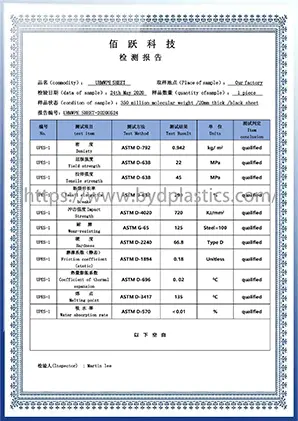
By sourcing raw materials from partners like TICONA (Celanese), LG Chem, and Sinopec, we ensure polymer chains meet molecular weight specifications. Testing includes density tests, Shore D hardness measurements, tensile strength testing, and moisture analysis. Every order is traceable, and COA (Certificate of Analysis) reports can be provided.
7. Certificate & Auditing Highlights
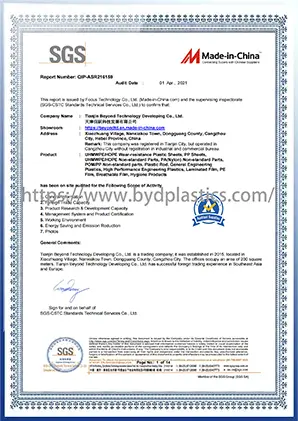
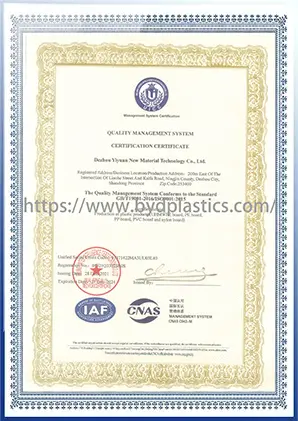
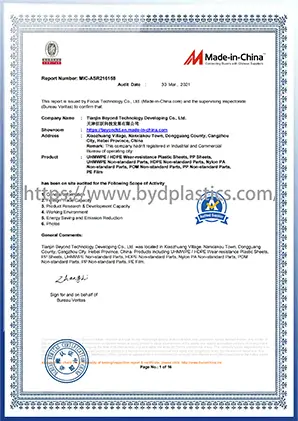
Our manufacturing operations comply with international quality protocols. Beyond holds certifications under ISO 9001, SGS, and BV, supporting our supply to precision industries in Europe, the Americas, and Southeast Asia.
8. Future Material Trends & R&D Initiatives
The engineering plastics sector is moving toward hybrid polymers and circular economy models. Beyond's research and development focuses on three primary areas:
Bio-Based Feedstocks: Researching ultra-high-molecular polymers derived from non-petroleum bases, targeting a lower carbon footprint for environmental projects.
Nano-Composite Reinforcements: Incorporating glass fibers, graphene, and carbon nanotubes to elevate the continuous service temperature of UHMWPE beyond the traditional 80°C threshold.
Recycled Material Cycles: Offering custom-formulated mixed recycled sheet blocks that blend post-industrial HDPE and UHMWPE scrap to deliver cost-effective shielding and structural products without sacrificing mechanical performance.
9. Global Compliance, Logistics, & Support
Tianjin Beyond operates an export system servicing over 40 countries. We offer support across multiple operational areas:
Regulatory Compliance: All food-grade rods comply with FDA regulations and REACH requirements. RoHS compliance ensures electronic manufacturing safety.
Optimized Packaging: Rods are packed on reinforced pallets and bundled in protective sleeves to prevent surface scratches, warping, or contamination during ocean transit.
Technical Support: Our engineers assist with material selection, advising on issues like the choice between RAM extrusion and compression-molded rods, thermal allowance designs, and machining tool angles.
10. FAQ: Technical Insights & Procurement Guide
How does the wear life of UHMWPE rods compare to Carbon Steel or Bronze?
In highly abrasive environments (like sand slurry handling or mining chutes), UHMWPE's wear life can be up to 4 to 6 times longer than carbon steel. Unlike metals, UHMWPE is ductile and absorbs impact energy, which prevents abrasive particles from micro-cutting the surface.
What is the difference between RAM Extruded and Compression Molded UHMWPE rods?
RAM extrusion is a continuous production process ideal for producing standard rods of long lengths, offering good consistency for high-volume machining. Compression molding is typically used for large-diameter rods and heavy-duty slabs; it features lower internal stress levels and minimizes dimensional deformation during detailed CNC processing.
Can UHMWPE rods be used in high-temperature environments?
UHMWPE is a thermoplastic with a melting point of approximately 135°C. Its recommended continuous service temperature range is -250°C to +80°C. For applications exceeding 90°C, alternative engineering polymers like Nylon, POM, or PTFE should be evaluated depending on load and friction requirements.
Are there modified grades of UHMWPE rods available?
Yes, we manufacture modified grades, including UV-stabilized grades for outdoor applications, carbon-filled antistatic grades (surface resistivity 10^3 to 10^5 ohms), flame-retardant (UL94 V-0 class) options, and borated shielding formulas.
Industrial Raw Material & Processing Inventory
High-Grade Semi-Finished Polyethylene & Engineering Thermoplastics for Machinery, Infrastructure, and Heavy Equipment
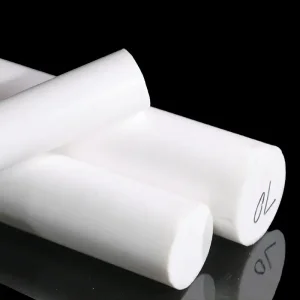
China White solid PTFE rod / teflon rod Manufacturer, Suppliers
 Beyond