 Beyond
1 / 3
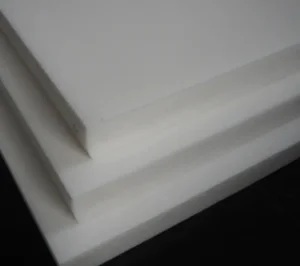
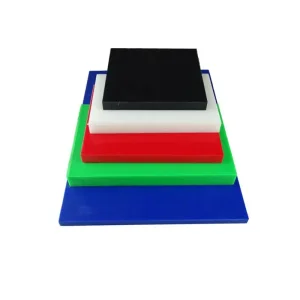
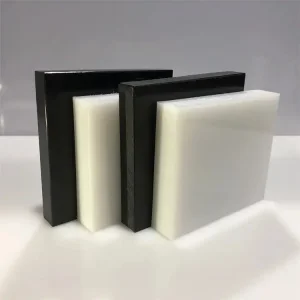
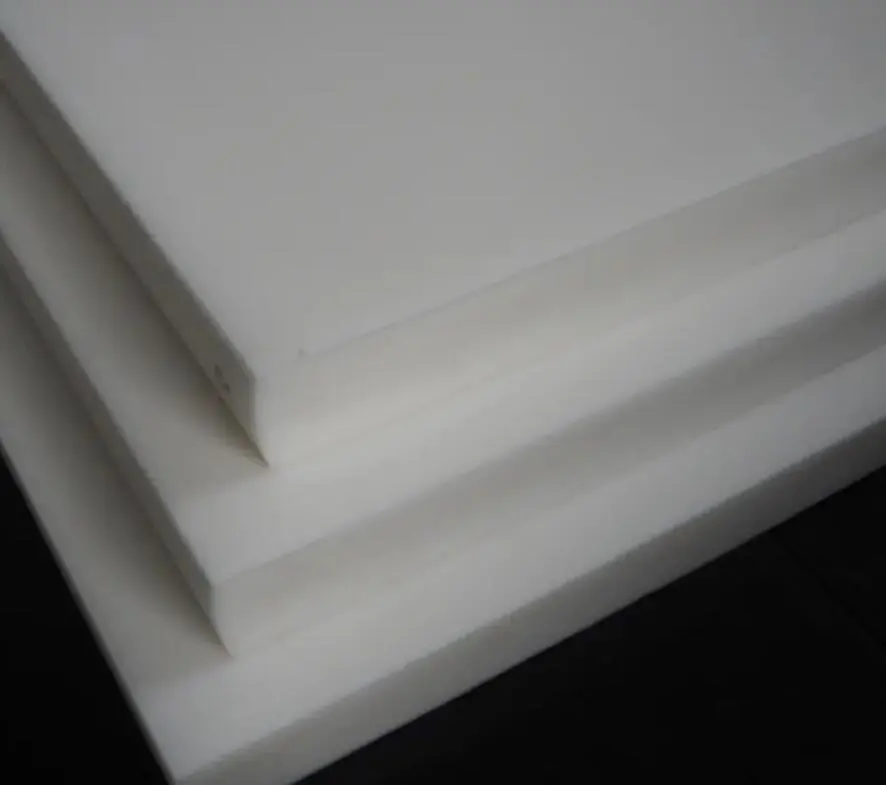
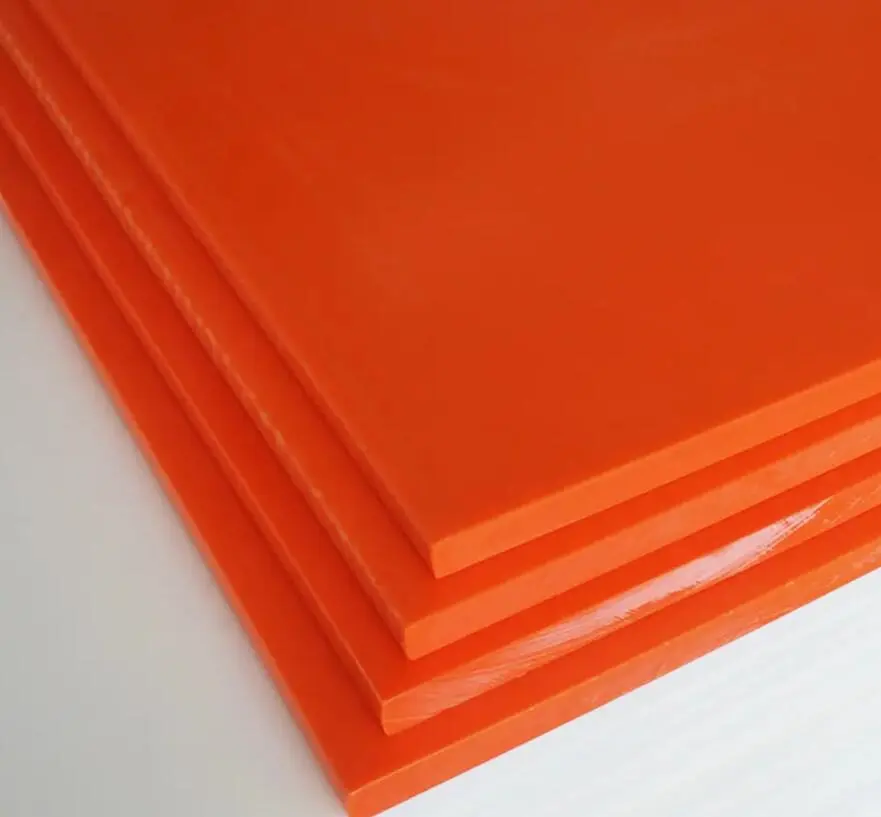
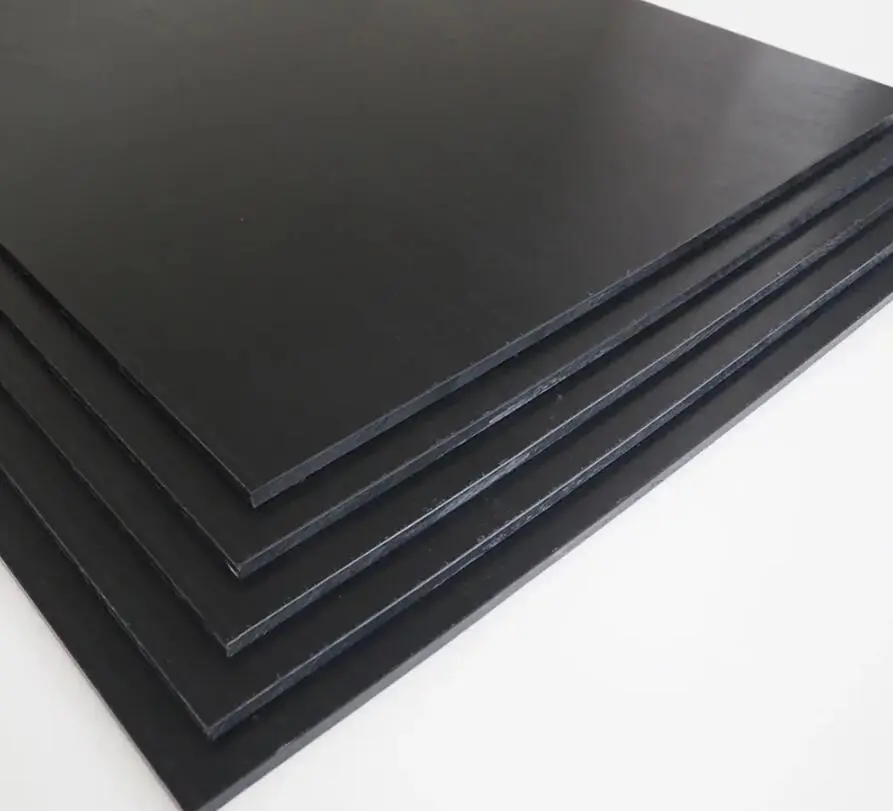
Polyoxymethylene (POM) is a versatile polymer widely used in various industries due to its excellent properties. One of the most popular POM products is POM sheet, which is known for its high surface strength, excellent sliding properties and excellent wear resistance. But what exactly makes POM sheets so special?
First, POM sheets are very strong and rigid, making them ideal for applications that require high toughness. Thanks to its high impact strength, even at low temperatures, POM sheets can withstand a lot of stress without cracking or breaking, making them very reliable and durable.
Another major advantage of POM sheets is their low moisture absorption. In a saturated state, POM sheets absorb only about 0.8% of moisture, which means they are highly resistant to humidity and moisture-related damage. This makes them ideal for use in applications where exposure to moisture is a potential problem.
In addition, POM sheets are known for their excellent wear resistance and sliding properties. The high strength and smooth surface of POM sheet ensures that it is highly resistant to abrasion and tear, making it ideal for use in applications where friction is a critical issue.
POM sheets are also highly machinable, meaning they can be easily cut, shaped and molded to suit a wide range of applications. This makes them versatile and suitable for a variety of industrial settings.
Additionally, POM sheets have good creep resistance, which means they won't deform or shift over time. They also have high dimensional stability, which ensures that they retain their exact shape and size after being cut or machined.
POM sheets are also highly resistant to hydrolysis, which means they can withstand prolonged exposure to water without breaking down. In fact, POM-C (copolymer) exhibits high thermal stability and high resistance to chemicals, including hydrolysis.
Finally, POM sheets have excellent resilience and recovery elasticity, which ensures that they can bounce back from any deformation or impact without losing their shape or performance.
In summary, POM sheet is a versatile and reliable polymer that can be used in a variety of applications. Their outstanding strength, wear resistance, dimensional stability and processability make them ideal for industrial environments where toughness and durability are key issues. POM sheets are highly resistant to moisture and hydrolysis, and are highly resilient and durable, making them a must-have for any serious industrial project.
| Colored POM Board Specification Data Sheet | |||||
|---|---|---|---|---|---|
|
Description | Item No. | Thickness (mm) | Width & Length (mm) | Density (g/cm³) |
| Colored POM Board | ZPOM-T-C | 10~100 | 600x1200 / 1000x2000 | 1.41 | |
| Tolerance (mm) | Weight (kg/pc) | Color | Material | Additive | |
| +0.2 ~ +2.0 | / | Any Color | LOYOCON MC90 | / | |
| Volume Abrasion | Friction Factor | Tensile Strength | Elongation at Break | Bending Strength | |
| 0.0012 cm³ | 0.43 | 64 MPa | 23% | 94 MPa | |
| Flexural Modulus | Charpy Impact Strength | Heat Distortion Temp | Rockwell Hardness | Water Absorption | |
| 2529 MPa | 9.9 kJ/m² | 118 °C | M78 | 0.22% | |
| Item Name | Thickness (mm) | Size (mm) | Tolerance for Thickness (mm) | E.S.T N.W (KGS) |
|---|---|---|---|---|
| delrin pom plate | 1 | 1000x2000 | (+0.10) 1.00-1.10 | 3.06 |
| 2 | 1000x2000 | (+0.10) 2.00-2.10 | 6.12 | |
| 3 | 1000x2000 | (+0.10) 3.00-3.10 | 9.18 | |
| 4 | 1000x2000 | (+0.20) 4.00-4.20 | 12.24 | |
| 5 | 1000x2000 | (+0.25) 5.00-5.25 | 15.3 | |
| 6 | 1000x2000 | (+0.30) 6.00-6.30 | 18.36 | |
| 8 | 1000x2000 | (+0.30) 8.00-8.30 | 26.29 | |
| 10 | 1000x2000 | (+0.50) 10.00-10.5 | 30.50 | |
| 12 | 1000x2000 | (+1.20) 12.00-13.20 | 38.64 | |
| 15 | 1000x2000 | (+1.20) 15.00-16.20 | 46.46 | |
| 20 | 1000x2000 | (+1.50) 20.00-21.50 | 59.76 | |
| 25 | 1000x2000 | (+1.50) 25.00-26.50 | 72.50 | |
| 30 | 1000x2000 | (+1.60) 30.00-31.60 | 89.50 | |
| 35 | 1000x2000 | (+1.80) 35.00-36.80 | 105.00 | |
| 40 | 1000x2000 | (+2.00) 40.00-42.00 | 118.83 | |
| 45 | 1000x2000 | (+2.00) 45.00-47.00 | 135.00 | |
| 50 | 1000x2000 | (+2.00) 50.00-52.00 | 149.13 | |
| 60 | 1000x2000 | (+2.50) 60.00-62.50 | 207.00 | |
| 70 | 1000x2000 | (+2.50) 70.00-72.50 | 232.30 | |
| 80 | 1000x2000 | (+2.50) 80.00-82.50 | 232.30 | |
| 90 | 1000x2000 | (+3.00) 90.00-93.00 | 268.00 | |
| 100 | 1000x2000 | (+3.50) 100.00-103.5 | 299.00 | |
| 110 | 610x1220 | (+4.00) 110.00-114.00 | 126.8861 | |
| 120 | 610x1220 | (+4.00) 120.00-124.00 | 138.4212 | |
| 130 | 610x1220 | (+4.00) 130.00-134.00 | 149.9563 | |
| 140 | 610x1220 | (+4.00) 140.00-144.00 | 161.4914 | |
| 155 | 610x1220 | (+4.00) 150.00-154.00 | 173.0265 | |
| 160 | 610x1220 | (+4.00) 160.00-164.00 | 184.5616 | |
| 180 | 610x1220 | (+4.00) 180.00-184.00 | 207.6318 | |
| 200 | 610x1220 | (+4.00) 200.00-205.00 | 230.702 |
| Color: | white | Bending tensile stress / Tensile stress off shock: | 68/- Mpa | Critical tracking index(CTI): | 600 |
| Proportion: | 1.41 g/cm³ | Breaking tensile strain: | 35% | Bonding capacity: | + |
| Heat resistance (continuous): | 115 ℃ | Tensile modulus of elasticity: | 3100 MPa | Food contact: | + |
| Heat resistance (short-term): | 140 | Compressive stress of normal strain-1%/2%: | 19/35 MPa | Acid resistance: | + |
| Melting point: | 165 ℃ | Pendulum gap impact test: | 7 | Alkali resistance | + |
| Glass transition temperature: | _ | Friction coefficient: | 0.32 | Carbonated water resistance: | + |
| Linear thermal expansion coefficient (avg 23~100℃): | 110×10⁻⁶ m/(m.k) | Rockwell hardness: | M84 | Aromatic compound resistance: | + |
| (average 23-150℃): | 125×10⁻⁶ m/(m.k) | Dielectric strength: | 20 | Ketone resistance: | + |
| Flammability(UI94): | HB | Volume resistance: | 10¹⁴ Ω×cm | Thickness tolerance(mm): | 0~3% |
| Water absorption (23℃ for 24H): | 20% | Surface resistance: | 10¹³ Ω | ||
| (Dipping into water at 23℃): | 0.85% | Relative dielectric constant-100HZ/1MHz: | 3.8/3.8 |
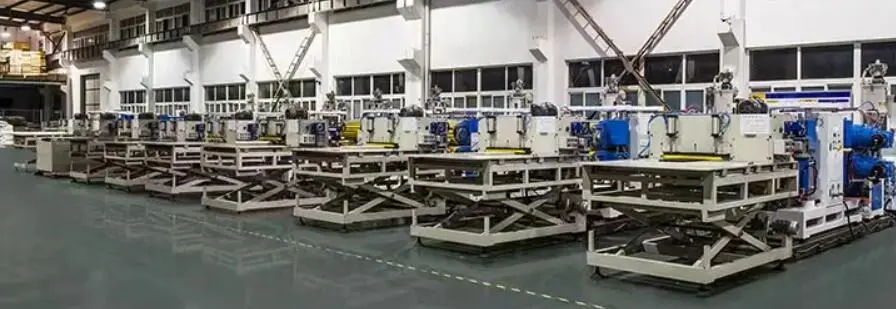
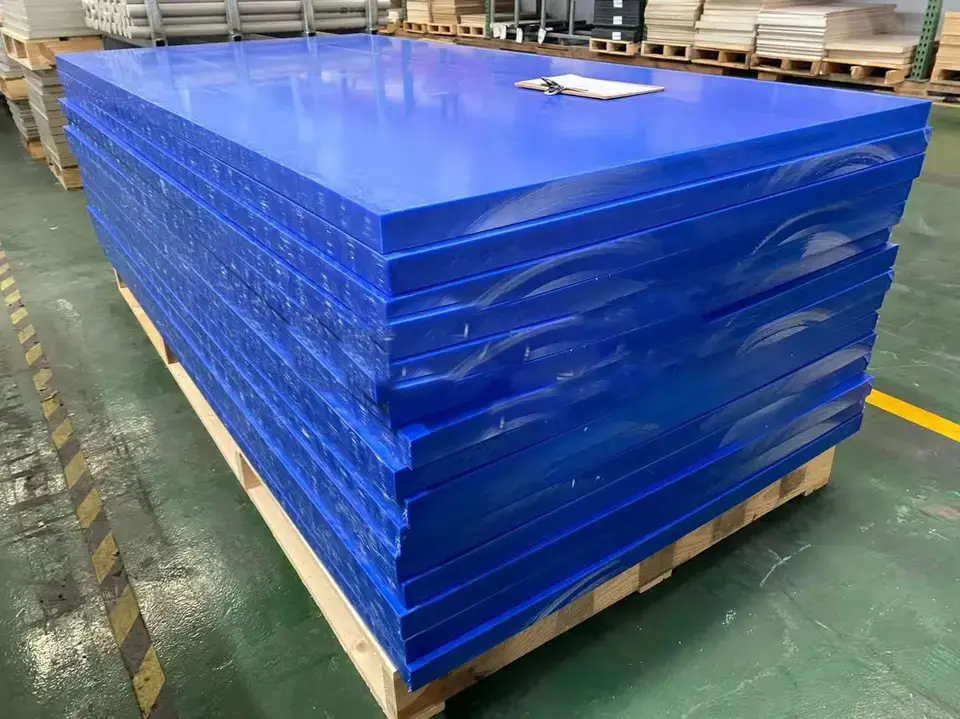
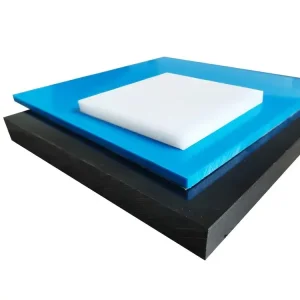
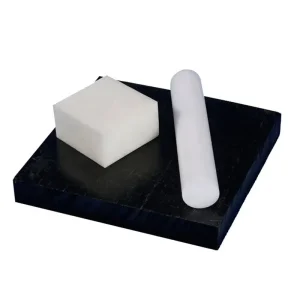
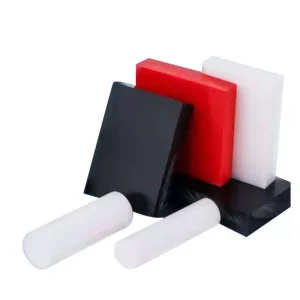
Testing protocols are designed to ensure consistent quality and performance across all items, including sheets and rods manufactured from UHMWPE, MC nylon, PA6, POM, HDPE, PP, PU, PC, PVC, ABS, Acrylic, PTFE, PEEK, PPS, and PVDF materials.

POM sheets are highly valued for their high surface strength, exceptional sliding properties, minimal wear, high rigidity, and excellent impact resistance even at very low temperatures.
POM sheets exhibit exceptionally low moisture absorption, taking in only about 0.8% water at a saturated state. This makes them highly dimensionally stable and resistant to humidity-related degradation.
Yes, POM is highly machinable. It can be easily cut, routed, drilled, and fabricated to close tolerances, making it highly versatile for custom industrial parts.
POM-C (copolymer) offers enhanced thermal stability and a very high resistance to chemical breakdown, particularly showing excellent resistance to hydrolysis when exposed to hot water.
Due to their low friction coefficient and dimensional stability, POM sheets are commonly used in precision engineering components, gears, bearings, sliding elements, and wear strips across various industrial settings.
POM sheets exhibit excellent creep resistance and resilience, which prevents them from permanently deforming or shifting over long periods under continuous load conditions.