Direct from Tianjin Beyond: Industrial-grade sheets, rods, profiles, and customizable construction safety systems.
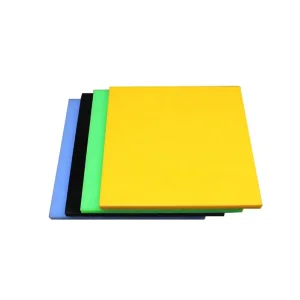
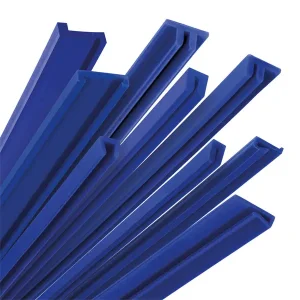
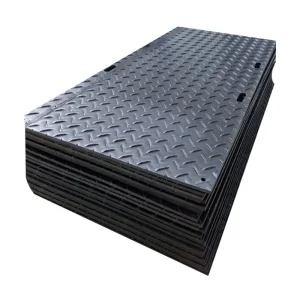
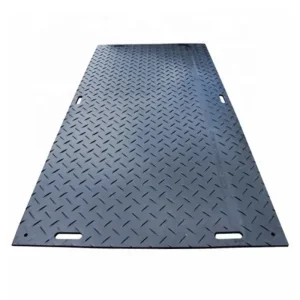
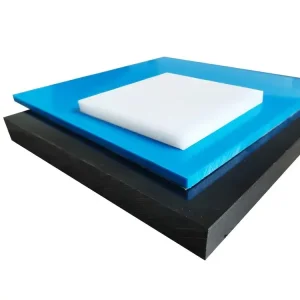
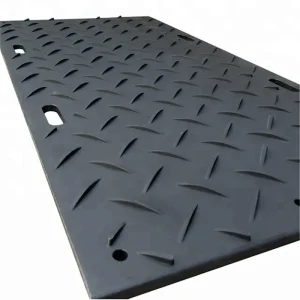
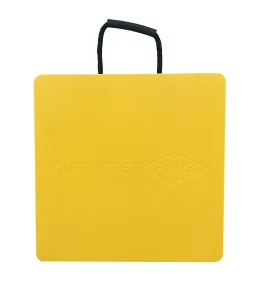
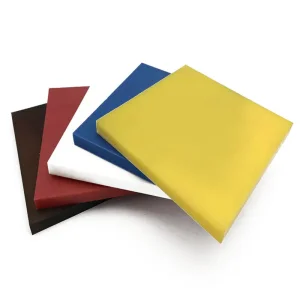
Modern industrial lifting equipment, including mobile cranes, concrete pumps, boom trucks, and aerial work platforms, operates under extreme physical forces. Safe operation is fundamentally dependent on structural load propagation—specifically, the distribution of localized vertical and shear forces from stabilizers (outriggers) down to the ground. Without appropriate load dispersal, structural support systems risk ground penetration, sinking, or sudden collapse. This failure mode represents a primary hazard in crane operations.
Historically, heavy engineering projects relied on wooden cribbing or steel plates for load distribution. However, wood exhibits anisotropic physical traits, meaning its mechanical strength varies with fiber direction, moisture content, and internal decay. Steel plates, while highly rigid, are susceptible to corrosion, heavy self-weight, and catastrophic bending deformation. These issues introduce hidden failure vectors. The deployment of advanced Polyethylene Outrigger Pads—specifically those synthesized from Ultra-High-Molecular-Weight Polyethylene (UHMW-PE) and High-Density Polyethylene (HDPE)—represents a major material shift that resolves these issues.
Required Pad Area (A) = Total Operating Weight / Ground Bearing Capacity (GBC). To ensure operation within safety margins, the contact area must distribute the point load of the outrigger shoe so that the pressure applied to the ground never exceeds the GBC. Custom-engineered PE outrigger pads distribute this point load across a broader surface area, reducing localized ground pressure by up to 90%.
Understanding the mechanical, thermal, and chemical differences between UHMW-PE (PE1000) and HDPE (PE300) is essential for selecting the correct outrigger pad for a given load capacity. Both polymers consist of repeating ethylene chains, but their molecular weights differ significantly. This distinction defines their mechanical properties under extreme compression, friction, and shear forces.
UHMW-PE features an ultra-high molecular weight (typically between 3.5 to 9.2 million g/mol). This molecular configuration yields high impact resistance, extreme wear resistance, and minimal deformation under continuous static loads. In contrast, HDPE (typically 200,000 to 500,000 g/mol) is a lighter-weight, cost-effective alternative. It offers high chemical resistance, zero moisture absorption, and sufficient compressive yield strength for light to medium-duty applications. Choosing the appropriate polymer configuration ensures structural performance matches the specific demands of the job site.
| Physical / Mechanical Properties | UHMW-PE (PE1000) | HDPE (PE300/PE500) | Traditional Hardwood |
|---|---|---|---|
| Molecular Weight (g/mol) | ~3.5 - 9.0 Million | ~300,000 - 500,000 | N/A (Natural Fiber) |
| Compressive Yield Strength (MPa) | > 20 - 25 MPa | > 15 - 18 MPa | 3 - 8 MPa (Highly Variable) |
| Water Absorption (%) | < 0.01% (Zero swelling) | < 0.01% (Zero swelling) | 15% - 50% (Swells & rots) |
| Dynamic Friction Coefficient | 0.12 - 0.20 | 0.20 - 0.28 | 0.40 - 0.60 |
| Impact Resistance (kJ/m²) | No Break (Extremely High) | > 10 kJ/m² | Low (Splits under stress) |
| Service Temperature Limit | -150°C to +85°C | -50°C to +80°C | Degrades in wet/heat cycles |
Combining automated raw material processing with precision CNC machining to deliver consistent engineering polymers worldwide.
Tianjin Beyond operates an expansive manufacturing base featuring dedicated compression molding lines, high-throughput extrusion workshops, and CNC machining centers, allowing us to maintain stable production across large orders.
We source raw materials from globally recognized chemical suppliers, including TICONA, LG, and Sinopec. This supply chain security ensures consistent polymer molecular density and physical performance.
Equipped with gantry CNC lathes, high-capacity milling systems, and large-format engraving tables, we machine non-standard custom shapes, handle details, patterns, and logo engraving directly into the outrigger pads.
In modern industrial manufacturing, supply chain disruptions can delay large-scale infrastructure projects. Tianjin Beyond mitigates this vulnerability through vertically integrated production. By managing the production process from raw resin blending to high-tonnage compression molding, extrusion, and final CNC machining, we ensure consistent quality control. Automated thermal profiling during the consolidation cycle prevents the formation of internal voids and structural stress concentrations in our UHMW-PE sheets, ensuring reliable performance in demanding load-bearing applications.
Our quality assurance system conforms to ISO9001, SGS, and BV standards. Every batch of OEM outrigger pads undergoes testing for compressive yield strength, dimensional accuracy under load, and environmental degradation resistance. This systematic monitoring guarantees that all shipped units comply with international heavy lifting guidelines, offering global procurement officers a reliable alternative to traditional supply channels.
As occupational safety regulations tighten worldwide, construction firms, equipment rental fleets, and mining operators are replacing legacy ground support materials with engineered polymers. In North America and Europe, guidelines such as OSHA 1926.1402 and the UK’s LOLER require equipment operators to verify ground conditions and use adequate support materials. Polyethylene outrigger pads help operators meet these requirements by offering predictable, documented load-bearing capacities that wood and makeshift plates cannot provide.
Furthermore, the total cost of ownership (TCO) calculation heavily favors custom PE outrigger pads. While wood is cheaper initially, its susceptibility to rotting, cracking, and moisture absorption leads to regular replacement cycles. Steel pads require heavy lifting equipment for transport and pose safety risks due to sharp edges and weight. Lightweight PE outrigger pads feature built-in safety handles (such as high-strength nylon rope or integrated steel rings), reducing manual handling risks on site and lowering transport emissions across equipment fleets.
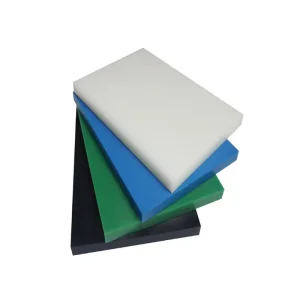
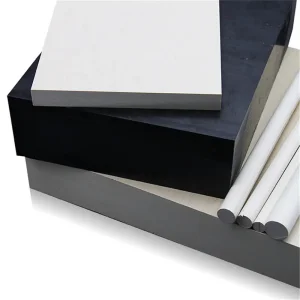
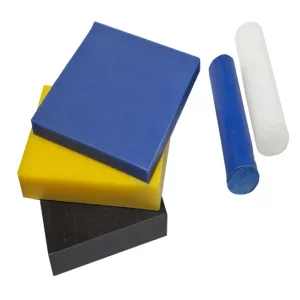
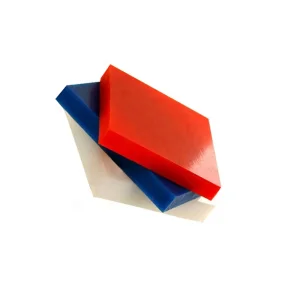
Tianjin Beyond designs and manufactures custom outrigger pads, heavy equipment road mats, and custom CNC wear parts. Our product line supports diverse load requirements, from light utility lifts to high-tonnage crawler crane configurations, ensuring stable ground support on soft soils and sensitive paved surfaces.
Key information regarding material selection, performance limitations, and ordering specifications.
The required pad size depends on the crane’s maximum outrigger load (found in the manufacturer’s load chart) and the Ground Bearing Capacity (GBC) of the working surface. Pad thickness is determined by calculating the flexural strength needed to distribute the load across the pad’s surface without excessive bending. Our engineering team uses finite element analysis (FEA) to recommend specific pad configurations based on your machinery profile and typical site conditions.
UHMW-PE outrigger pads have an expected service life of 10 to 15 years, depending on use conditions. Unlike hardwood pads, which absorb water, rot, split under stress, and typically require replacement within 1 to 3 years, UHMW-PE pads do not absorb moisture, resist UV damage, and maintain their physical properties under cyclic loading.
Yes. Our CNC machining centers allow us to manufacture outrigger pads to your exact specifications. We produce round, square, and custom-angled shapes. We can engrave custom textures for improved traction, mill recessed profiles to seat outrigger feet, and add company branding, logo engravings, and part numbers for asset tracking.
We perform compression testing to measure yield points under load, ultrasonic verification to check for internal voids, and dimensional inspections to verify tolerances. Certified inspection reports (including COA) are available for large-volume industrial supply orders.
Our UHMW-PE and HDPE pads retain their structural integrity across a wide temperature range, from -150°C to +80°C. In sub-zero conditions, the polymer chains do not embrittle, maintaining impact resistance. They are resistant to oils, hydraulic fluids, and common industrial chemicals, allowing for reliable operation in challenging industrial environments.
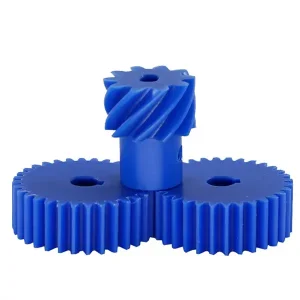
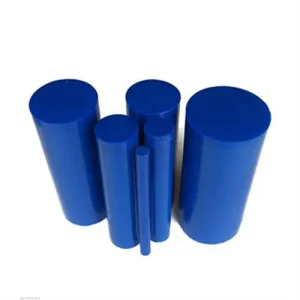
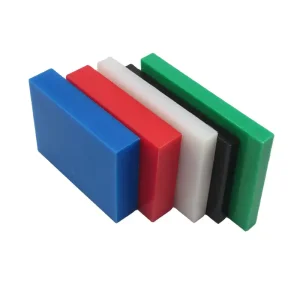
Heavy-duty protective panels, engineering rods, and custom CNC gear systems engineered for high-wear environments.
 Beyond